Historical Markers on Filipino Women’s Sexuality During Spanish Colonial Times
By Gloria Esguerra Melencio
The intention of this research paper is to compile data about the Filipino women’s activities, rituals and customs related to sexuality and mark its historical markers along the way from the 16th up to 17th centuries.
The paper asks the following questions: What did the Spanish colonizers find out when they first saw the women? How did the Spanish colonizers view the Filipino women through time? What were the Filipino women’s activities, rituals and customs that pertain to sexuality? How did they express their sexual desires? Why were polygamy, concubinage and abortion practiced ? How did the Spanish colonizers wield the Christian Doctrine to conquer the so-called Evils that plague the Filipino women? What was the perception of the Filipino women of the Spanish colonizers?
Why sexuality? Why Historical Markers?
First, the researcher chooses the sexuality aspect of women as a topic because most of the materials gathered about womanhod focus on chastity, modesty, virginity, relationship with men and everything related to her being a woman that involves conception, childbearing, giving birth or failing to give birth.
Sexuality here as the Webster’s Dictionary defines is the “possession of the structural and functional differentia of sex.”
Second, the researcher sees putting historical markers on the important events related to women’s sexuality using the historical process of Spanish colonization as a backdrop while putting forth forward the social issues that have arisen as past and present-day problems.
Third, the researcher categorizes the historical markers as nodal points in the meeting of two different peoples and cultures – the paganistic native Filipinos and the Christian Hispanics – and discovers along the way a metamorphosed culture where can be threshed out specific issues of Filipino women related to sexuality.
The periodization, as the researcher discerns, is fluid. It means the event or symbolical object had begun or surfaced when the Spanish colonizers set foot on the islands in the 16th century and continued until the 17th century. Or may have been continuing up until the present time.
Further study on the periods that are marked as nodal points in women’s sexuality is a must in the future because it will provide explanations and clarifications as to what had transpired in the past that led the way to where the women are now in history.
Full Link posted 17 September 2009 on Philippine History and provided to the Babaylan Files by Letecia Layson
Showing posts with label Decolonization and Filipino Identity. Show all posts
Showing posts with label Decolonization and Filipino Identity. Show all posts
Saturday, September 24, 2011


Saturday, September 03, 2011
Curing Colonial Stupor, A booklist
Why is decolonization and indigenization important to Filipinos today? One of the reasons is that it helps Filipinos become more integrated in their own cultural identity. It also helps them become strengthened as a collective of people who are of the archipelago called the Philippines or whose ancestry hails from there. Why do Filipinos have some sort of cultural identity crisis? Maybe this can help you find answers:
Here is the intro to a booklist called Curing Colonial Stupor, at amazon.com:
Here is the intro to a booklist called Curing Colonial Stupor, at amazon.com:
When an imperial power comes and colonizes indigenous people, takes away their culture and language and teaches native people to become eurocentric and to look down upon their own kind... a human sickness sets in that is called colonial mentality. This is a systemic and traumatic kind of educational and programming of minds. It is a set of dysfunctional human beings, with a superiority complex, teaching with brutal methods, another set of human beings how to have an inferiority complex and how to be innately dysfunctional as a human being.
This dysfunction, this colonial mentality and colonizers mentality can be cured.
How to find healing?
First, get very angry. The first book listed here will help you do that and is called The Forbidden Book for a reason. Who among the U.S. imperial forces want the little people, among those they colonized and in their own country, to understand the demented thinking they have that justifies their colonization of people who seek their own independence and ways of life?
Next, figure out that this whole Life thing and how people think is all a Game of sorts. The illusions that people project upon us, that we agree to uphold can be shattered.
Next, find ways to rid yourself of programmed thinking that you unconsciously began to subscribe to throughout your life. Aha! That's the catch---it takes years to deprogram. But a personal practice of meditation and self-reflection can help you achieve that.
Return to your roots.
Unsubscribe from belief systems that were constructed to benefit one people and take away from another.
Find healing, wholeness, Clarity.This booklist includes titles such as:
- Forbidden Book, by Abe Ignacio, Enrique de la Cruz, Jorge Emmanuel, Helen Toribio
- Waking Up In Time: Finding Inner Peace In Times of Accelerating Change by Peter Russell
- Coming Full Circle, by Leny Strobel
- If Life is a Game These are the Rules by Chérie Carter-Scott
- How to See Yourself as You Really Are... by by Dalai Lama
Sunday, February 27, 2011
shine mentality, a cure for crab mentality by Perla Daly
If the cure to colonial mentality is a mental and spiritual decolonization then the cure to crab mentality has to be what I now call Shine Mentality.
In 2002, I remember speakiing to a group of women in the Manila at a Wowee! Workshop on women's wisdom. When I told them that there is room in this world for everyone to shine because inside all women are fabulous---I got a lot of unbelieving looks. A lot of women around the world, even in the United States, the birthplace of the term liberated woman, don't believe that they've got fabulous-ness or the ability to shine within their own selves in the first place.
I know that most of those Filipino women, like me, were raised up to be quiet and demure---keep your legs closed and your thoughts to yourself....etc, etc. Little do most of us mahinhin/lady like Filipinas realize that some of these tenets of femininity have suppressed our full expression of who we are and have prevented us from pursuing our dreams. It's how we're raised and how our environments influence us that cause us to limit ourselves, and to want to limit others too, even bring them down.
We all need to discover for ourselves how we can live life to the fullest and to also discover how we can want others to live to their fullest potential too. What keeps people from "shining"? What causes people to want others to not shine or to bring down others with their crab mentality?
Read more of the blogpost on NewFilipina.com
In 2002, I remember speakiing to a group of women in the Manila at a Wowee! Workshop on women's wisdom. When I told them that there is room in this world for everyone to shine because inside all women are fabulous---I got a lot of unbelieving looks. A lot of women around the world, even in the United States, the birthplace of the term liberated woman, don't believe that they've got fabulous-ness or the ability to shine within their own selves in the first place.
I know that most of those Filipino women, like me, were raised up to be quiet and demure---keep your legs closed and your thoughts to yourself....etc, etc. Little do most of us mahinhin/lady like Filipinas realize that some of these tenets of femininity have suppressed our full expression of who we are and have prevented us from pursuing our dreams. It's how we're raised and how our environments influence us that cause us to limit ourselves, and to want to limit others too, even bring them down.
We all need to discover for ourselves how we can live life to the fullest and to also discover how we can want others to live to their fullest potential too. What keeps people from "shining"? What causes people to want others to not shine or to bring down others with their crab mentality?
Read more of the blogpost on NewFilipina.com
Wednesday, December 29, 2010
An Encounter with the Babaylan By Rhea Claire E. Madarang
Sr. Mary John Mananzan was a keynote speaker at the FAWN 2005 Conference in New York City. The conference was constructed upon the 5 babaylan leadership archetypes of Warrior, Teacher, Healer, Visionary and Priestess. Sr Mary John's keynote was how the power roles of the babaylan are a deep part of her work and own journey.
At the recent Bahay Nakpil booklaunch of the Babaylan book, here's a young writer reflecting on the event:
At the recent Bahay Nakpil booklaunch of the Babaylan book, here's a young writer reflecting on the event:
An Encounter with the Babaylan
By Rhea Claire E. Madarang, November 2010
Warrior, teacher, healer and visionary. This was how Sr. Mary John Mananzan described the babaylan, the historical figure whom before then I only knew through my history schoolbooks as a healer and priestess in Filipino indigenous communities during the pre-colonial era.
Mananzan, a contemporary babaylan herself, spoke these words with a quiet force. I listened, together with a rapt audience of around 40. They were also attendees of the book launch of “Babaylan: Filipinos and the Call of the Indigenous” on that warm Monday afternoon at Bahay Nakpil, Quiapo, Manila. Writers of the book, all with deep involvement with the babaylan tradition, and people significant to the creation of the book were speaking in turns.
Warrior, teacher, healer and visionary? I felt overwhelmed by the immensity of the power and significance of the babaylans in pre-Spanish Philippines.
Prof. Fe Mangahas corroborated the power of the babaylan in her sharing, saying that in indigenous communities back then, there were three significant roles - the datu, panday and the babaylan. The datu was the ruler and the panday ensured the livelihood of the people through farming for example – both roles addressed material concerns, while the babaylan was solely in charge of the spiritual realm and also had influence on the material concerns such as determination of the best time for farming.
But the power of the babaylan is not only possessed by women, as I had thought – and as many others had thought, I believe. It is also wielded by men. According to Katrin de Guia, one of the book writers, some northern provinces have men performing the roles of the babaylan. To the Ifugaos, this is the mumbaki.
With every speaker’s words, I felt my awe and respect for the babaylan grow, but I was most jolted by Mananzan’s sharing, for she shared how, in these modern times, she took on the roles of warrior, teacher, healer and visionary in her work for women’s empowerment and social transformation.
The babaylan is thus not just a powerful historical figure but a very real and present power anyone can access at any moment. As Teresita Obusan, another of the book’s authors, put it: “The spirit of the babaylan never dies.” It is always there, available to everyone.
Upon realizing this, I felt the faintest stirring in my body of – dare I say it? – the babaylan spirit. Is there not a babaylan in me – in all of us? I wrote down this realization in one of the pieces of paper given to us for reflection after the speakers’ sharings.
At the end of the book launch, professor and modern babaylan Grace Odal, performed a babaylan ritual dance, scattering rose petals, lighting incense and singing along the way. In a white flowing dress and with flowers crowning her head, her movements were both graceful – as befitting her name – and forceful.
Slowly, she led almost all of us to dance along with her and urged us to make any movement that came naturally to us. We danced moving in a circle, as though in a trance, but still conscious. The air was electric, charged with the energy of this ancient ritual performed in the present.
After that I had no doubt as to the reality and power of the babaylan spirit. And through that experience I believe I’ve glimpsed the babaylan in me too.
(Thank you for sharing, Claire! And may you continue to be inspired and empowered by the babaylans of our history, our lives today and our country's future.)
(Thank you for sharing, Claire! And may you continue to be inspired and empowered by the babaylans of our history, our lives today and our country's future.)
Filipino Tattoos Ancient to Modern by Lane Wilcken
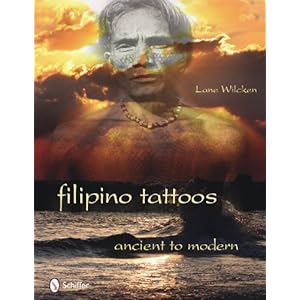
Lane Wilcken became one of the Co-Directors of CFBS recently and his book, Filipino Tattoos: Ancient to Modern, just came out.
I just wrote and posted a book review for Lane's book. Lane has worked on and written this book with the utmost passion for his Philippine roots, and with love and respect for his family and ancestry. He writes in the true spirit of Pakikipagkapwa---Sacred Interconnection with all Life.
Congrats and thank you, Lane.
Get more information on his book and read my review at http://www.amazon.com/Filipino-Tattoos-Ancient-Modern-Wilcken/dp/0764336029
Thursday, December 16, 2010
Feminism Ala Babaylan
Manila Bulletin, Sept 20, 2010
MANILA, Philippines - It is hard to believe that modern Filipinas whose ancestors suffered two waves of colonial rule -- Spain in the 16th century and the United States in the early 19th century -- have a tradition of feminism that dates back to pre-Hispanic Philippines. Yes, every modern Filipina should know that she owes her freedom and strong-mindedness in part to a more than 500-year old tradition of intentional, forceful, and positive feminism, longer than the history of women's liberation in the West.
The babaylans, an empowered class of women who reigned prior to the arrival of the Spanish colonials in the 1521, were healers, advisers of men, intercessors between material and spiritual worlds, inspirers of arts and crafts, and believers of a holistic world view, according to the scholarly writings of Dr. Fe Buenaventura Mangahas and Professor Jenny Romero Llaguno, co-editors of the 192-page Centennial Crossings, Readings on Babaylan Feminism in the Philippines, published by the C & E Publishing Inc. in 2006.
Identifying with the babaylans nowadays, appreciating what they went through when their men were defeated by colonial rule -- how these women hid, survived, and preserved their culture during the colonial era -- will give feminists in the Philippines a more solid historical ground to stand on in their advocacies on freedom and responsibility.
Majority of Filipinas would not have found it necessary to strut in the 70s and in the 80s like their bra-burning sisters from the West who eventually became anti-male and anti-family. At the time, feminism, coupled with romanticism and rebelliousness, claimed a major role in attracting young female intellectuals in universities to join the Maoist red flag. Later, many of them were dismayed to find out that macho culture was not only present but remained strong in the underground movement. Well, the season of tears is over and it's not too late to get affirmation from an older past, sisters, asserts Mangahas, former chair of the Social Sciences Department of St. Scholastica College and now a full time book writer on history and Philippine feminism."I have been studying the babaylans since the 80s," she recalls.
In a joint project with historian Dr. Zeus Salazar in 2000, Mangahas remembers reconstructing the Philippine prehistoric socio-political structure in the pamayanan (kingdom) as containing four types of leaders: the datu (king); the sundalo (warrior); the panday (technologist) and the babaylan. "In 2005, I coined the word babaylan feminism because many believed then that we did not have an indigenous tradition of feminism," says Mangahas. This was more than 30 years after she, too, almost succumbed to the belief that Western feminism presented the right model for emerging, liberal Filipinas. For Mangahas and Llaguno, modern-day feminists can use babaylan as an adjective to identify Philippine feminism. In a sense, the babaylan-spirit is like a cross to ward off the Draculas of the past and the neurosis of colonialism which have burdened us with disturbing questions about identity.
Knowing the babaylan spirit, the authors say, can help Philippine feminists understand why, despite their conscious drive for freedom, they continue to love men without guilt and nurture families unconditionally.
What was the inherent nature of the old babaylans? "Because of the babaylans, we can say that we (Filipinas) were the avatars of Asia. In pre-historic time, we never had patriarchy or matriarchy. Gender ties were egalitarian," says Mangahas. The division of labor between men and women then was not a curse, but a form of harmony. In a country that was often visited by volcanic eruptions and typhoons, men and women shared the dangers equally and protected their progeny.
This magical order was disrupted. "When the Spaniards in the 1500s co-opted the datus, the babaylans resisted fiercely. Then, they creatively adopted Christianity in order to survive; they became pasyon chanters. They functioned as a priesthood -- natural Christians who balanced both the connection between the material and non material world," explains Mangahas. "When the babaylans became rivals of the Spanish priests, the latter called them bruha or witches who allegedly dabbled in black magic. They were demonized. But I think the babaylans had true access to the good spirits," she adds."It was a good thing that the priests who came to the Philippines also studied our languages and cultural practices, which they adapted to propagate Christianity. That also helped in the preservation of our culture (including the babaylans)," says Mangahas."Our Western sisters too must have had it (the babaylan spirit), in the past, but their patriarchy became too strong and their society too rationalistic that they were forced to undertake a radical form of feminism," she explains.
Asked about the reactions of Filipino men to the book, she says, "The Filipino men who have read the book were in awe. They never imagined there was a time in the past when Filipina women were empowered, who were part of a power system, and had an egalitarian relationship with men."
"We speculate that the spirit of the babaylan still exists up to the present time. You see women who behave that way," Llaguno says. For Mangahas and Llaguno, reclaiming (intellectually) the indigenous dignity of Filipina women in the past is, ironically, the only way to give a deeper dimension and unique meaning to the freedom being sought by post-modern Filipinas. Their other mission, they add, is to end the negative view perpetrated by the Spanish priests about the babaylans.
The book, composed of 15 articles written by contemporary women who were inspired by the babaylan spirit, was a project that began in 2005, recalls Llaguno, also the book's copy-editor. A lecture on the book, including a re-launch, was held before members of the Diliman Book Club at Restaurant of Choice, University of the Philippines Alumni Association building on September 11.
COPYRIGHT 2010 Manila Bulletin Publishing Corp.
COPYRIGHT 2010 Gale, Cengage Learning
MANILA, Philippines - It is hard to believe that modern Filipinas whose ancestors suffered two waves of colonial rule -- Spain in the 16th century and the United States in the early 19th century -- have a tradition of feminism that dates back to pre-Hispanic Philippines. Yes, every modern Filipina should know that she owes her freedom and strong-mindedness in part to a more than 500-year old tradition of intentional, forceful, and positive feminism, longer than the history of women's liberation in the West.
The babaylans, an empowered class of women who reigned prior to the arrival of the Spanish colonials in the 1521, were healers, advisers of men, intercessors between material and spiritual worlds, inspirers of arts and crafts, and believers of a holistic world view, according to the scholarly writings of Dr. Fe Buenaventura Mangahas and Professor Jenny Romero Llaguno, co-editors of the 192-page Centennial Crossings, Readings on Babaylan Feminism in the Philippines, published by the C & E Publishing Inc. in 2006.
Identifying with the babaylans nowadays, appreciating what they went through when their men were defeated by colonial rule -- how these women hid, survived, and preserved their culture during the colonial era -- will give feminists in the Philippines a more solid historical ground to stand on in their advocacies on freedom and responsibility.
Majority of Filipinas would not have found it necessary to strut in the 70s and in the 80s like their bra-burning sisters from the West who eventually became anti-male and anti-family. At the time, feminism, coupled with romanticism and rebelliousness, claimed a major role in attracting young female intellectuals in universities to join the Maoist red flag. Later, many of them were dismayed to find out that macho culture was not only present but remained strong in the underground movement. Well, the season of tears is over and it's not too late to get affirmation from an older past, sisters, asserts Mangahas, former chair of the Social Sciences Department of St. Scholastica College and now a full time book writer on history and Philippine feminism."I have been studying the babaylans since the 80s," she recalls.
In a joint project with historian Dr. Zeus Salazar in 2000, Mangahas remembers reconstructing the Philippine prehistoric socio-political structure in the pamayanan (kingdom) as containing four types of leaders: the datu (king); the sundalo (warrior); the panday (technologist) and the babaylan. "In 2005, I coined the word babaylan feminism because many believed then that we did not have an indigenous tradition of feminism," says Mangahas. This was more than 30 years after she, too, almost succumbed to the belief that Western feminism presented the right model for emerging, liberal Filipinas. For Mangahas and Llaguno, modern-day feminists can use babaylan as an adjective to identify Philippine feminism. In a sense, the babaylan-spirit is like a cross to ward off the Draculas of the past and the neurosis of colonialism which have burdened us with disturbing questions about identity.
Knowing the babaylan spirit, the authors say, can help Philippine feminists understand why, despite their conscious drive for freedom, they continue to love men without guilt and nurture families unconditionally.
What was the inherent nature of the old babaylans? "Because of the babaylans, we can say that we (Filipinas) were the avatars of Asia. In pre-historic time, we never had patriarchy or matriarchy. Gender ties were egalitarian," says Mangahas. The division of labor between men and women then was not a curse, but a form of harmony. In a country that was often visited by volcanic eruptions and typhoons, men and women shared the dangers equally and protected their progeny.
This magical order was disrupted. "When the Spaniards in the 1500s co-opted the datus, the babaylans resisted fiercely. Then, they creatively adopted Christianity in order to survive; they became pasyon chanters. They functioned as a priesthood -- natural Christians who balanced both the connection between the material and non material world," explains Mangahas. "When the babaylans became rivals of the Spanish priests, the latter called them bruha or witches who allegedly dabbled in black magic. They were demonized. But I think the babaylans had true access to the good spirits," she adds."It was a good thing that the priests who came to the Philippines also studied our languages and cultural practices, which they adapted to propagate Christianity. That also helped in the preservation of our culture (including the babaylans)," says Mangahas."Our Western sisters too must have had it (the babaylan spirit), in the past, but their patriarchy became too strong and their society too rationalistic that they were forced to undertake a radical form of feminism," she explains.
Asked about the reactions of Filipino men to the book, she says, "The Filipino men who have read the book were in awe. They never imagined there was a time in the past when Filipina women were empowered, who were part of a power system, and had an egalitarian relationship with men."
"We speculate that the spirit of the babaylan still exists up to the present time. You see women who behave that way," Llaguno says. For Mangahas and Llaguno, reclaiming (intellectually) the indigenous dignity of Filipina women in the past is, ironically, the only way to give a deeper dimension and unique meaning to the freedom being sought by post-modern Filipinas. Their other mission, they add, is to end the negative view perpetrated by the Spanish priests about the babaylans.
The book, composed of 15 articles written by contemporary women who were inspired by the babaylan spirit, was a project that began in 2005, recalls Llaguno, also the book's copy-editor. A lecture on the book, including a re-launch, was held before members of the Diliman Book Club at Restaurant of Choice, University of the Philippines Alumni Association building on September 11.
COPYRIGHT 2010 Manila Bulletin Publishing Corp.
COPYRIGHT 2010 Gale, Cengage Learning
Saturday, August 22, 2009
Baybayin and Decolonization
In my blog Baybayin Alive, I encourage people to explore an indigenous way of thinking in order to understand the deeper meanings of the Baybayin Symbols. You can read that post at Holistic Approach: Returning to Ancestral Thinking.
Here is my latest post:
Fertility Symbols, Feminine Principle and BA

I also talk about the fertility symbols of the lingling-o and the dinumug...
The lingling-o is a common ancient artifact symbolizing fertility found around Southeast Asia and the Philippines(ca. 500 B.C.–100 A.D.); dinumug is a fertility symbol and symbol of prosperity and love found in the Ifugao, Bontoc and other Cordillera regions of the northern Philippines.
This particular post at Baybayin Alive goes on to talk about how the fertility symbol shape could very well be the imagery from which the BA baybayin symbol (clefted version) evolved from.
Here is my latest post:
Fertility Symbols, Feminine Principle and BA
In summary it talks about the BA baybayin symbols...

both of which are yonni symbols or fertility symbols.
I also talk about the fertility symbols of the lingling-o and the dinumug...

lingling-o on left and dinumug on right
(Source: Kipas Gallery - http://www.kipas.nl/Beads/BontFertSym.htm)
The lingling-o is a common ancient artifact symbolizing fertility found around Southeast Asia and the Philippines(ca. 500 B.C.–100 A.D.); dinumug is a fertility symbol and symbol of prosperity and love found in the Ifugao, Bontoc and other Cordillera regions of the northern Philippines.
This particular post at Baybayin Alive goes on to talk about how the fertility symbol shape could very well be the imagery from which the BA baybayin symbol (clefted version) evolved from.
Wednesday, July 29, 2009
Artistic Expressions - Painting the Brown Face Red
Painting the Brown Face Red
by Leny Strobel
grateful for the invitation
i entered the arbor and sacred ceremony
honoring maiden, matron, elder.
saying prayers to the four directions
in my mind's eye, i was bowing
palms together in front of my chest
I say silently:
I am Asian. Filipino.
holding the talking stick
i share my answer to the question:
what has been your burden this past year?
how did you heal?
i listened to everyone else's answer to same.
after the talking stick made its round
i wished to respond
to go deeper into intimacy
i say silently: I am Filipino.
I want more Kapwa.
drumbeats accompanied wailing time
sage purifying, healing, honoring
after the tears
a holy silence.
drumming began again
i feel the earth vibrate
shy at first, we dance in a circle.
my mind returns to Iloilo
dancing with my tribes
i wished to be back there
with my kin.
but i am in indian canyon
with native sisters
with white women
with black women
we say: it's all good.
it is what it is.
then someone interrupts:
it's not all good. sometimes it sucks.
sometimes it hurts.
the elders pontificate around the fire
wisdom we need to hear
advice on sex and death
on learning to listen.
the wind was howling
we were freezing even around the fire
then before midnite we say
goodbye and thank you
we walk back to camp
pitch dark, the stars are almost within reach.
our hearts are large
our souls feel blessed.
as for the things i didn't say ...
as for the things i didn't understand ...
as for the unaswered curiosities ...
as for the feeling of uncertainty...
as for the longing for more...
the next night i dreamt of a long-absent lover
who has returned to marry me.
oh what bliss!
Link accessed 7/19/2009
by Leny Strobel
grateful for the invitation
i entered the arbor and sacred ceremony
honoring maiden, matron, elder.
saying prayers to the four directions
in my mind's eye, i was bowing
palms together in front of my chest
I say silently:
I am Asian. Filipino.
holding the talking stick
i share my answer to the question:
what has been your burden this past year?
how did you heal?
i listened to everyone else's answer to same.
after the talking stick made its round
i wished to respond
to go deeper into intimacy
i say silently: I am Filipino.
I want more Kapwa.
drumbeats accompanied wailing time
sage purifying, healing, honoring
after the tears
a holy silence.
drumming began again
i feel the earth vibrate
shy at first, we dance in a circle.
my mind returns to Iloilo
dancing with my tribes
i wished to be back there
with my kin.
but i am in indian canyon
with native sisters
with white women
with black women
we say: it's all good.
it is what it is.
then someone interrupts:
it's not all good. sometimes it sucks.
sometimes it hurts.
the elders pontificate around the fire
wisdom we need to hear
advice on sex and death
on learning to listen.
the wind was howling
we were freezing even around the fire
then before midnite we say
goodbye and thank you
we walk back to camp
pitch dark, the stars are almost within reach.
our hearts are large
our souls feel blessed.
as for the things i didn't say ...
as for the things i didn't understand ...
as for the unaswered curiosities ...
as for the feeling of uncertainty...
as for the longing for more...
the next night i dreamt of a long-absent lover
who has returned to marry me.
oh what bliss!
Link accessed 7/19/2009
Friday, July 10, 2009
Conversations - Signs and Symptoms of Decolonized Filipinas in the US
Signs and Symptoms of Decolonized Filipinas in the US
by Leny Strobel
1. She understands European and American colonial history and its psychic and epistemic violence on herself and her people.
2. She understands that her presence in the US is a product of this history. The narration of US history as it relates to the Philippines should be understood as an imperial and colonial narrative in need of critique and revision.
3. She does archeological psychic work to uncover, discover, or reimagine, what her Filipina indigenous memory is trying to teach or reveal to her.
4. Filipino indigenous memory reveals intuitive knowledge about who she is as an indigenous woman. Indigenous Filipino theorizing includes language-based concepts like Kapwa, Loob, Damdamin, Diwa, Dangal, Paninindigan -- that gives a decolonized Filipina a narrative that anchors her identity and her life work in Filipino values.
5. She recognizes that the framework of indigeneity and decolonization can serve as a powerful critique of modernity and its discontents. After all, modernity is the newbie on the block (only 500 years old and yet has brought more havoc on the planet than anything before it).
6. A decolonized Filipina knows herself as a "self-in-relation" (kapwa) rather than the product of the western and liberal notion of the self as an "individual with free will" acting out of its self-interest.
7. A decolonized Filipina understands that the location and position of her Fil Am community need to be reframed away from the model of assimilation into US society. The assimilationist model has long been debunked as an unviable and an unsustainable one.
8. A decolonized Filipina in the US understands that she lives on stolen land from indigenous peoples on this continent. What are the implications of such realization? What is the connection between the taking of the Philippines by colonizers and the taking of this continent?
9. A decolonized Filipina understands the uses of history in order to be an effective and powerful woman in the US context. If NVM Gonzalez is correct in saying, "To be a good American, you must be a good Filipina first," how does a US-born Filipina begin to articulate what it means for her to be a good Filipina?
10. A decolonized Filipina has a global perspective that is informed by what the rest of the planet has to say and not just the US perspective.
Link accessed 7/19/2009, backdated for archive purposes.
by Leny Strobel
1. She understands European and American colonial history and its psychic and epistemic violence on herself and her people.
2. She understands that her presence in the US is a product of this history. The narration of US history as it relates to the Philippines should be understood as an imperial and colonial narrative in need of critique and revision.
3. She does archeological psychic work to uncover, discover, or reimagine, what her Filipina indigenous memory is trying to teach or reveal to her.
4. Filipino indigenous memory reveals intuitive knowledge about who she is as an indigenous woman. Indigenous Filipino theorizing includes language-based concepts like Kapwa, Loob, Damdamin, Diwa, Dangal, Paninindigan -- that gives a decolonized Filipina a narrative that anchors her identity and her life work in Filipino values.
5. She recognizes that the framework of indigeneity and decolonization can serve as a powerful critique of modernity and its discontents. After all, modernity is the newbie on the block (only 500 years old and yet has brought more havoc on the planet than anything before it).
6. A decolonized Filipina knows herself as a "self-in-relation" (kapwa) rather than the product of the western and liberal notion of the self as an "individual with free will" acting out of its self-interest.
7. A decolonized Filipina understands that the location and position of her Fil Am community need to be reframed away from the model of assimilation into US society. The assimilationist model has long been debunked as an unviable and an unsustainable one.
8. A decolonized Filipina in the US understands that she lives on stolen land from indigenous peoples on this continent. What are the implications of such realization? What is the connection between the taking of the Philippines by colonizers and the taking of this continent?
9. A decolonized Filipina understands the uses of history in order to be an effective and powerful woman in the US context. If NVM Gonzalez is correct in saying, "To be a good American, you must be a good Filipina first," how does a US-born Filipina begin to articulate what it means for her to be a good Filipina?
10. A decolonized Filipina has a global perspective that is informed by what the rest of the planet has to say and not just the US perspective.
Link accessed 7/19/2009, backdated for archive purposes.
Sunday, July 05, 2009
Definitions: Decolonization
In 2007, Leny Strobel developed a list of traits possessed by individuals who have awakened into a different sense of being, often as part of their reconnection with their Filipino heritage and growing awareness of babaylan practices.
Signs and Symptoms of Decolonized Filipinas in the US:
1. She understands European and American colonial history and its psychic and epistemic violence on herself and her people.
2. She understands that her presence in the US is a product of this history. The narration of US history as it relates to the Philippines should be understood as an imperial and colonial narrative in need of critique and revision.
3. She does archeological psychic work to uncover, discover, or reimagine, what her Filipina indigenous memory is trying to teach or reveal to her.
4. Filipino indigenous memory reveals intuitive knowledge about who she is as an indigenous woman. Indigenous Filipino theorizing includes language-based concepts like Kapwa, Loob, Damdamin, Diwa, Dangal, Paninindigan -- that gives a decolonized Filipina a narrative that anchors her identity and her life work in Filipino values.
5. She recognizes that the framework of indigeneity and decolonization can serve as a powerful critique of modernity and its discontents. After all, modernity is the newbie on the block (only 500 years old and yet has brought more havoc on the planet than anything before it).
6. A decolonized Filipina knows herself as a "self-in-relation" (kapwa) rather than the product of the western and liberal notion of the self as an "individual with free will" acting out of its self-interest.
7. A decolonized Filipina understands that the location and position of her Fil Am community need to be reframed away from the model of assimilation into US society. The assimilationist model has long been debunked as an unviable and an unsustainable one.
8. A decolonized Filipina in the US understands that she lives on stolen land from indigenous peoples on this continent. What are the implications of such realization? What is the connection between the taking of the Philippines by colonizers and the taking of this continent?
9. A decolonized Filipina understands the uses of history in order to be an effective and powerful woman in the US context. If NVM Gonzalez is correct in saying, "To be a good American, you must be a good Filipina first," how does a US-born Filipina begin to articulate what it means for her to be a good Filipina?
10. A decolonized Filipina has a global perspective that is informed by what the rest of the planet has to say and not just the US perspective.
Contributed by Leny Strobel, originally posted on Kathang-Pinay, 24 October 2007.
Links accessed 7/5/09.
Signs and Symptoms of Decolonized Filipinas in the US:
1. She understands European and American colonial history and its psychic and epistemic violence on herself and her people.
2. She understands that her presence in the US is a product of this history. The narration of US history as it relates to the Philippines should be understood as an imperial and colonial narrative in need of critique and revision.
3. She does archeological psychic work to uncover, discover, or reimagine, what her Filipina indigenous memory is trying to teach or reveal to her.
4. Filipino indigenous memory reveals intuitive knowledge about who she is as an indigenous woman. Indigenous Filipino theorizing includes language-based concepts like Kapwa, Loob, Damdamin, Diwa, Dangal, Paninindigan -- that gives a decolonized Filipina a narrative that anchors her identity and her life work in Filipino values.
5. She recognizes that the framework of indigeneity and decolonization can serve as a powerful critique of modernity and its discontents. After all, modernity is the newbie on the block (only 500 years old and yet has brought more havoc on the planet than anything before it).
6. A decolonized Filipina knows herself as a "self-in-relation" (kapwa) rather than the product of the western and liberal notion of the self as an "individual with free will" acting out of its self-interest.
7. A decolonized Filipina understands that the location and position of her Fil Am community need to be reframed away from the model of assimilation into US society. The assimilationist model has long been debunked as an unviable and an unsustainable one.
8. A decolonized Filipina in the US understands that she lives on stolen land from indigenous peoples on this continent. What are the implications of such realization? What is the connection between the taking of the Philippines by colonizers and the taking of this continent?
9. A decolonized Filipina understands the uses of history in order to be an effective and powerful woman in the US context. If NVM Gonzalez is correct in saying, "To be a good American, you must be a good Filipina first," how does a US-born Filipina begin to articulate what it means for her to be a good Filipina?
10. A decolonized Filipina has a global perspective that is informed by what the rest of the planet has to say and not just the US perspective.
Contributed by Leny Strobel, originally posted on Kathang-Pinay, 24 October 2007.
Links accessed 7/5/09.
Monday, June 15, 2009
Features: Back from the Goddess Gathering - Part 2
Over the weekend of May 15, Letecia Layson attended the RCG-I Gathering of Priestesses and Goddess Women in Wisconsin Dells, Wisconsin. There Leticia presented a workshop titled workshop "Babaylan - Past, Present and Future". The Center asked Letecia to share her experiences there. Part 1 of this article is her open letter to the Babaylan Yahoo group. Part 2 sets the context of her presentation. Part 3 is the resources she provided to workshop participants.
Greetings from Southern CA!
Thank you for attending my workshop at the RCGI Priestess and Goddesswomen gathering. Congratulations to the congregation for 25 years of service to women and the community. Congratulations to the four new ordained Priestesses! I feel fortunate to be a witness to so much joy, fun, laughter, deep sharing and a time capsule to be opened at the 50th - wow!!
I appreciate the patience you had for the technical difficulty, though you briefly were able to hear the voice of Mendung Sabal, who died a few months ago.
Mendung Sabal is one of the 10 Filipino Oralists interviewed in The Shared Voice - Chanted and spoken narratives from the Philippines by Grace Nono At the end of the post I am including (see part 3) resources where you might be able to find books I listed, or invite your local library to order them and have them on hand. Maybe you will be able to get them by way of interlibrary loans. Here are a a few of Grace's videos (eds note: the first few seconds of the Balaleng Video has a sharp teleprompter tone. Please be patient and wait through it, the video is well worth it.)
The time we had together seemed too short and I hope I did not overwhelm you with information. This workshop is inspired by the work co-presented at past gatherings with Deb Trent "She of Many Colors" It was my hope and intention to honor Deb with is work, our ancestors, our teachers, the ancestors of the land, the elements and the elementals.
It was is important to set a context from which the babaylan tradition lives in - yes, a living tradition that managed to exist through the 333 years of colonization by Spain and the 50 years of the USA's presence in the Philippines. "Without looking back at the past, one cannot go forward into the future." -- Jose Rizal. The challenge I had presenting the material is in the relam of the Sacred, the past is now, the future is now and the present in now. "The Geography of Thought" by Richard Nisbett shares insights into how culture affects thinking processes - the differences of Eastern and Western thought. Here is a review of the book.
"The Shared Voice" by Grace Nono also provides some good references regarding the oralist and the literate styles, recognizing the secondary oralist as one who bridges the two styles using both systems. Note: the book comes with a CD that has recordings of those interviewed with their music/songs with English translations in the book. To quote Grace:
"It is an enormous challenge for oral traditions to thrive in the era of globalization that has followed centuries of colonization. The survival of these traditions requires conscious effort, fortitude, and commitment, not for one, ten or a hundred, but of all Filipinos who are reawakened to the oralist calling."
"May we, secondary oralists, develop the habit of regular self-examination as well as a general attitude of humility in the face of our own frailties, and in acknowledgement of the inexhaustible source of wisdom from which we can draw guidance, hope, and inspiration in the course of our journey."
I shared two poems that nested the major content of the workshop, Recipe for Cooking Fear and We Are Born With Gifts, written by Leny Mendoza Strobel from A Book of Her Own - Words, Images to Honor the Babaylan. You can find links at Leny's website for her blog. Leny's first book, Coming Full Circle - THE PROCESS OF DECOLONIZATION AMONG POST-1965 FILIPINO AMERICANS identifies the experience of many Filipino Americans. While my experience being born to a Manong who arrived on the mainland in 1926 at age 16 and a WWII War Bride, who arrived on the mainland on 1947 (just as the Philippines was given its independence at the end of WWII) had many similarities as described in Coming Full Circle, I was raised with traditional Filipino values in the home.
Two streams of western Goddess Traditions and Filipino Spirituality/ religion came together in the first series of classes I took at Circle of Aradia in Feminist Witchcraft in the Dianic Tradition. At the end of the first class we were asked to research a Goddess from our ethnic background and if that was not something that worked for us, research a Goddess that called to us. The Coulorful Mandaya: Ethnic Tribe of Davao Oriental by Ursula Cinc Valderrama. The book is an ethnographic study of the people (you can read a bit about them here). In the chapter "The making of Baylan (the same as a babaylan)" the rituals, chants, etc are included. Any woman of the tribe can be a baylan (providing they qualify), a priestess. The diwatas show their acceptance by possessing the baylan becoming a channel, oracle, healer, visionary, etc. During the ordination ceremony, the woman would need to invoke and make tributes to Gamaogamao, believed to be a water goddess.
I spent the next five weeks meditating on/with Gamaogamao as part of the workshop series. I was to ask if there was something that She wanted share with the women of the class and what She wanted me to tell the women about her. The last class we were required to invoke and aspect (speak as) our Goddess. I invoked and spoke as Gamaogamao in that last class forever linking my two spiritual streams.
Republished with permission and gratitude. Links accessed 6/15/09.
Greetings from Southern CA!
Thank you for attending my workshop at the RCGI Priestess and Goddesswomen gathering. Congratulations to the congregation for 25 years of service to women and the community. Congratulations to the four new ordained Priestesses! I feel fortunate to be a witness to so much joy, fun, laughter, deep sharing and a time capsule to be opened at the 50th - wow!!
I appreciate the patience you had for the technical difficulty, though you briefly were able to hear the voice of Mendung Sabal, who died a few months ago.
Mendung Sabal is one of the 10 Filipino Oralists interviewed in The Shared Voice - Chanted and spoken narratives from the Philippines by Grace Nono At the end of the post I am including (see part 3) resources where you might be able to find books I listed, or invite your local library to order them and have them on hand. Maybe you will be able to get them by way of interlibrary loans. Here are a a few of Grace's videos (eds note: the first few seconds of the Balaleng Video has a sharp teleprompter tone. Please be patient and wait through it, the video is well worth it.)
The time we had together seemed too short and I hope I did not overwhelm you with information. This workshop is inspired by the work co-presented at past gatherings with Deb Trent "She of Many Colors" It was my hope and intention to honor Deb with is work, our ancestors, our teachers, the ancestors of the land, the elements and the elementals.
It was is important to set a context from which the babaylan tradition lives in - yes, a living tradition that managed to exist through the 333 years of colonization by Spain and the 50 years of the USA's presence in the Philippines. "Without looking back at the past, one cannot go forward into the future." -- Jose Rizal. The challenge I had presenting the material is in the relam of the Sacred, the past is now, the future is now and the present in now. "The Geography of Thought" by Richard Nisbett shares insights into how culture affects thinking processes - the differences of Eastern and Western thought. Here is a review of the book.
"The Shared Voice" by Grace Nono also provides some good references regarding the oralist and the literate styles, recognizing the secondary oralist as one who bridges the two styles using both systems. Note: the book comes with a CD that has recordings of those interviewed with their music/songs with English translations in the book. To quote Grace:
"It is an enormous challenge for oral traditions to thrive in the era of globalization that has followed centuries of colonization. The survival of these traditions requires conscious effort, fortitude, and commitment, not for one, ten or a hundred, but of all Filipinos who are reawakened to the oralist calling."
"May we, secondary oralists, develop the habit of regular self-examination as well as a general attitude of humility in the face of our own frailties, and in acknowledgement of the inexhaustible source of wisdom from which we can draw guidance, hope, and inspiration in the course of our journey."
I shared two poems that nested the major content of the workshop, Recipe for Cooking Fear and We Are Born With Gifts, written by Leny Mendoza Strobel from A Book of Her Own - Words, Images to Honor the Babaylan. You can find links at Leny's website for her blog. Leny's first book, Coming Full Circle - THE PROCESS OF DECOLONIZATION AMONG POST-1965 FILIPINO AMERICANS identifies the experience of many Filipino Americans. While my experience being born to a Manong who arrived on the mainland in 1926 at age 16 and a WWII War Bride, who arrived on the mainland on 1947 (just as the Philippines was given its independence at the end of WWII) had many similarities as described in Coming Full Circle, I was raised with traditional Filipino values in the home.
Two streams of western Goddess Traditions and Filipino Spirituality/ religion came together in the first series of classes I took at Circle of Aradia in Feminist Witchcraft in the Dianic Tradition. At the end of the first class we were asked to research a Goddess from our ethnic background and if that was not something that worked for us, research a Goddess that called to us. The Coulorful Mandaya: Ethnic Tribe of Davao Oriental by Ursula Cinc Valderrama. The book is an ethnographic study of the people (you can read a bit about them here). In the chapter "The making of Baylan (the same as a babaylan)" the rituals, chants, etc are included. Any woman of the tribe can be a baylan (providing they qualify), a priestess. The diwatas show their acceptance by possessing the baylan becoming a channel, oracle, healer, visionary, etc. During the ordination ceremony, the woman would need to invoke and make tributes to Gamaogamao, believed to be a water goddess.
I spent the next five weeks meditating on/with Gamaogamao as part of the workshop series. I was to ask if there was something that She wanted share with the women of the class and what She wanted me to tell the women about her. The last class we were required to invoke and aspect (speak as) our Goddess. I invoked and spoke as Gamaogamao in that last class forever linking my two spiritual streams.
Republished with permission and gratitude. Links accessed 6/15/09.
Saturday, May 23, 2009
Babaylan Conference 2010 Trailer
Babaylan Conference of 2010
April 17 – 18, 2010 at the
Sonoma State University, CA
For more information please visit our website:
http://www.babaylan.net/index.html
The fiscal agent for Center for babaylan Studies Conference 2010 is:
International Humanities Center
http://ihcenter.org/groups/babaylancenter
Organizers of 2010 Conference:
Leny Strobel, Project Director
Perla Daly, Letecia Layson, Baylan Megino, Project Co-Directors.
April 17 – 18, 2010 at the
Sonoma State University, CA
For more information please visit our website:
http://www.babaylan.net/index.html
The fiscal agent for Center for babaylan Studies Conference 2010 is:
International Humanities Center
http://ihcenter.org/groups/babaylancenter
Organizers of 2010 Conference:
Leny Strobel, Project Director
Perla Daly, Letecia Layson, Baylan Megino, Project Co-Directors.
Saturday, April 25, 2009
The Power of Healing: Remembering our Babaylan Spirit
~~ In The News ~~
Human beings are not born violent: Associate Professor Leny Mendoza-Strobel
SAN PEDRO—"Perhaps if women had never lost parity with men and we live in a society that honors both genders equally, we wouldn’t even need an International Women’s Day," declared Dr. Leny Mendoza Strobel, an Associate Professor of American Multicultural Studies at Sonoma State University, and a cultural and community advocate.
The celebration of International Women’s Day, which began in 1911 and celebrated in 63 countries and 982 events this year, is a "gesture of multiculturalism in its conservative form," according to Dr. Strobel, who spoke at the Men Reading Women’s Writings luncheon held at the Ports of Call Restaurant in San Pedro on Saturday, March 28. Her speech was entitled The Power of Healing: Remembering our Babaylan Spirit.
"Human beings are not born violent, do you agree?" she began. "We now have access to accounts that tell us of prehistoric huntergatherer societies that lived in balance with nature and harmony with each other and with other species. They had conflicts, but they did not have war."
Dr. Strobel said that even today, according to Filipino author Katrin de Guia, in the Philippine island of Palawan, there are still indigenous peoples that do not have a word for war in their language. "When developers began to encroach on their ancestral domains, they mainly avoided the conflict by moving deeper into the forest."
Historians write that matriarchal societies ended at the beginning of the agricultural era 10,000 years ago. That era also marked the beginning of patriarchal civilizations. "Matriarchal societies," says Dr. Strobel, "are non-hierarchical, egalitarian and deemed the relationship to the universe and all species as sacred. With the rise and evolution of patriarchy, these feminine values and energies were repressed and exiled into the narrow spaces of expression under the control of patriarchal institutions and systems."
Philippine Society in general is under-guarded by an egalitarian, lateral kinship system, according to a talk by Filipino professor Jaime Veneracion, at a lecture he delivered to a group of Fullbright scholars that included Dr. Strobel. "This is the reason," says Dr. Strobel, "why we have a difficult time adjusting to the requirements of modernity because underneath all these modern impositions is a bilateral egalitarian system."
Dr. Strobel said she recently had a discussion with her Fil-Am classes At Sonoma State University in which they talked about the values of "kapwa" (fellow humans) and "Bathala na" (God’s will), the value of "loob" (inner self) and "dangal" (honor) and "pakikiramdam" (sensitivity). "Many of the white students remarked how beautiful these values are, and that they would like to live their lives being more in tune to those values," Dr. Strobel revealed. "Our modern lives dismember and fragment our lives by exiling our feminine or female energies in the bedroom and in the home and the service of men’s needs," Dr. Strobel asserts. "Men are dismembered by cultural values that tell them that they must not cry or show emotions, or that the only way to survive and make it in the world is through aggressive competition," she adds.
She said that the psychology of "kapwa" (self) is geared towards the "babaylan" (ancient healer/shaman) practice that each human embodies male and female energy. "That’s what makes a person whole," said Dr. Strobel.
Linda Nietes, owner of Philippines Expressions Bookshop, which organized the event, thanked the men for coming and for reading stories and poems written by Filipino women. The readers were Robert J. Little, Jr. (Linda Nietes’ husband); who read Love ‘Em, Leave ‘Em and Speak Up Woman!, A Dalaga’s Debut, from the book Twenty-Five Chickens and Pig for Bride, read by Stephen Adamu; To the Man Who Thinks He’s in the Market, poetry by Rowena Penaflor Festin and In the Name of the Mother:100 Years of Philippine Feminist Poetry, 1889-1989 by Lilia Quindoza Santiago, read by Robert J. Little, Jr., The Legend of Lola Amonita, poetry by Elvira S. Mabanglo, and Silence, a story by Marianne Villanueva, read by Craig Diamond; and Beauty and the Brit by Joselle Concio Harkin, from the book Speak Up, read by Steve Austin, and Fruit Stall from the book, The Kissing: A Collection of Short Stories by Melinda Bobis, read by Steven de la Vega.
"Men are present because in our last event last year, we had made it an all-woman activity. Now we thank the men for coming," Nietes said. "This is an advocacy that we women cannot do alone…; to be able to highlight the fact that men and women are partners in their journey in this life."
Published on April 4, 2009 in Asian Journal Los Angeles, p. A3, accessed 4/24/2009.
Contributed by Leny Mendoza-Strobel
Human beings are not born violent: Associate Professor Leny Mendoza-Strobel
SAN PEDRO—"Perhaps if women had never lost parity with men and we live in a society that honors both genders equally, we wouldn’t even need an International Women’s Day," declared Dr. Leny Mendoza Strobel, an Associate Professor of American Multicultural Studies at Sonoma State University, and a cultural and community advocate.
The celebration of International Women’s Day, which began in 1911 and celebrated in 63 countries and 982 events this year, is a "gesture of multiculturalism in its conservative form," according to Dr. Strobel, who spoke at the Men Reading Women’s Writings luncheon held at the Ports of Call Restaurant in San Pedro on Saturday, March 28. Her speech was entitled The Power of Healing: Remembering our Babaylan Spirit.
"Human beings are not born violent, do you agree?" she began. "We now have access to accounts that tell us of prehistoric huntergatherer societies that lived in balance with nature and harmony with each other and with other species. They had conflicts, but they did not have war."
Dr. Strobel said that even today, according to Filipino author Katrin de Guia, in the Philippine island of Palawan, there are still indigenous peoples that do not have a word for war in their language. "When developers began to encroach on their ancestral domains, they mainly avoided the conflict by moving deeper into the forest."
Historians write that matriarchal societies ended at the beginning of the agricultural era 10,000 years ago. That era also marked the beginning of patriarchal civilizations. "Matriarchal societies," says Dr. Strobel, "are non-hierarchical, egalitarian and deemed the relationship to the universe and all species as sacred. With the rise and evolution of patriarchy, these feminine values and energies were repressed and exiled into the narrow spaces of expression under the control of patriarchal institutions and systems."
Philippine Society in general is under-guarded by an egalitarian, lateral kinship system, according to a talk by Filipino professor Jaime Veneracion, at a lecture he delivered to a group of Fullbright scholars that included Dr. Strobel. "This is the reason," says Dr. Strobel, "why we have a difficult time adjusting to the requirements of modernity because underneath all these modern impositions is a bilateral egalitarian system."
Dr. Strobel said she recently had a discussion with her Fil-Am classes At Sonoma State University in which they talked about the values of "kapwa" (fellow humans) and "Bathala na" (God’s will), the value of "loob" (inner self) and "dangal" (honor) and "pakikiramdam" (sensitivity). "Many of the white students remarked how beautiful these values are, and that they would like to live their lives being more in tune to those values," Dr. Strobel revealed. "Our modern lives dismember and fragment our lives by exiling our feminine or female energies in the bedroom and in the home and the service of men’s needs," Dr. Strobel asserts. "Men are dismembered by cultural values that tell them that they must not cry or show emotions, or that the only way to survive and make it in the world is through aggressive competition," she adds.
She said that the psychology of "kapwa" (self) is geared towards the "babaylan" (ancient healer/shaman) practice that each human embodies male and female energy. "That’s what makes a person whole," said Dr. Strobel.
Linda Nietes, owner of Philippines Expressions Bookshop, which organized the event, thanked the men for coming and for reading stories and poems written by Filipino women. The readers were Robert J. Little, Jr. (Linda Nietes’ husband); who read Love ‘Em, Leave ‘Em and Speak Up Woman!, A Dalaga’s Debut, from the book Twenty-Five Chickens and Pig for Bride, read by Stephen Adamu; To the Man Who Thinks He’s in the Market, poetry by Rowena Penaflor Festin and In the Name of the Mother:100 Years of Philippine Feminist Poetry, 1889-1989 by Lilia Quindoza Santiago, read by Robert J. Little, Jr., The Legend of Lola Amonita, poetry by Elvira S. Mabanglo, and Silence, a story by Marianne Villanueva, read by Craig Diamond; and Beauty and the Brit by Joselle Concio Harkin, from the book Speak Up, read by Steve Austin, and Fruit Stall from the book, The Kissing: A Collection of Short Stories by Melinda Bobis, read by Steven de la Vega.
"Men are present because in our last event last year, we had made it an all-woman activity. Now we thank the men for coming," Nietes said. "This is an advocacy that we women cannot do alone…; to be able to highlight the fact that men and women are partners in their journey in this life."
Published on April 4, 2009 in Asian Journal Los Angeles, p. A3, accessed 4/24/2009.
Contributed by Leny Mendoza-Strobel
Sunday, April 05, 2009
Artist Expressions - Urduja Custom Jewelry
Understanding the babaylan means more than just reading about the past and critiquing the present. The artist expresses the principles of the babaylan through her work.
Mary Ann Ubaldo writes:
I am an artist that deeply relates to our Filipino culture. It is a decolonization process(pagbabalik loob) for me of reconnecting with the past to get a better understanding of the present and be able to envision the future.
Going through this process strengthens the cultural connection to the Filipino indigenous culture, ideology as a source of grounding.
In this way, it promotes cultural and spiritual connection making it possible for us to identify with one's people and history despite personal, generational, education, economic classes and other forms of differences.
Language and the way of writing are foundations of one's culture. By using Baybayin/Alibata in my art it is a deeper search of our identity and understanding how the loss of language, ancient scripts affects our Filipino identity, that the Filipino culture is the soul of our people, a connection to our folk soul.
I could really say, I am on a LAKARAN, that inspired me to do it, a spiritual journey/ pilgrimage, towards understanding a little bit better our spiritual heritage. It is a pilgrimage back to my Filipino cultural roots, a search going back to our KATAALAN.
I see the power of art as a tool to educate and raise consciousness about our indigenous roots. I am reinventing who we are, making sense of what is it to be a Filipino/Filipina, not defined by colonizers.
I believe, there is an inner guiding spirit which I identify as my MUTYA, the spiritual force (diwa/soul) of Inang Bayan (Motherland), that leads me in my art. I am guided by BATHALA & our ancestors.
Through her different lines of jewelry, Mary Ann expresses the intricate relationship between the artist and her beliefs, providing a tangible method for others to connect with the deepness of the babaylan world-view.
Mary Ann Ubaldo writes:
I am an artist that deeply relates to our Filipino culture. It is a decolonization process(pagbabalik loob) for me of reconnecting with the past to get a better understanding of the present and be able to envision the future.
Going through this process strengthens the cultural connection to the Filipino indigenous culture, ideology as a source of grounding.
In this way, it promotes cultural and spiritual connection making it possible for us to identify with one's people and history despite personal, generational, education, economic classes and other forms of differences.
Language and the way of writing are foundations of one's culture. By using Baybayin/Alibata in my art it is a deeper search of our identity and understanding how the loss of language, ancient scripts affects our Filipino identity, that the Filipino culture is the soul of our people, a connection to our folk soul.
I could really say, I am on a LAKARAN, that inspired me to do it, a spiritual journey/ pilgrimage, towards understanding a little bit better our spiritual heritage. It is a pilgrimage back to my Filipino cultural roots, a search going back to our KATAALAN.
I see the power of art as a tool to educate and raise consciousness about our indigenous roots. I am reinventing who we are, making sense of what is it to be a Filipino/Filipina, not defined by colonizers.
I believe, there is an inner guiding spirit which I identify as my MUTYA, the spiritual force (diwa/soul) of Inang Bayan (Motherland), that leads me in my art. I am guided by BATHALA & our ancestors.
Through her different lines of jewelry, Mary Ann expresses the intricate relationship between the artist and her beliefs, providing a tangible method for others to connect with the deepness of the babaylan world-view.
Subscribe to:
Posts (Atom)