Sunday, January 30, 2011

Virgil Apostol's "Way of the Ancient Healer": A Review


Virgil Mayor Apostol, Way of the Ancient Healer
NORTH ATLANTIC BOOKS, 2010

Reviewed by Leny Mendoza Strobel
January 28, 2011

In a note I sent to Virgil shortly after receiving my copy of his book, I wrote: In a way, my books have been a way station for the arrival of the knowledge that you bring in this book. I said this because I’ve been writing about the need for those of us in the diaspora to have access to Filipino indigenous knowledge and practices as part of our decolonization process. For what is the point of deconstructing our colonized identities if, in the end, we didn’t have an indigenous narrative of our own? In all of my writing about decolonization and indigenization, I have described my own journey, including my desire to know more specifically about my own ancestral roots as a Kapampangan.

While I have the body memory, I didn’t have the ancestral stories to go along with it. Way of the Ancient Healer gave me those stories. Even if they are Virgil’s personal stories, he claims he speaks out of a collective voice as well…and that includes mine.

In reading Virgil’s Way of the Ancient Healer, I felt as if I finally had the empirical evidence or concrete data in the form of his own personal stories and those of others who reveal the encyclopedic knowledge of healing arts of our Filipino ancestors. He also links this knowledge to the traditions and practices of near and far neighbors in Southeast Asia and beyond. Even further, he also weaves these traditions within the realm of the cosmic and mythic. His narrative spans both ancient and contemporary times to show that the past is still alive in the present; in his Epilogue he envisions that our ancient ways of healing will survive into the future as well.

I used to read the Journal of Noetic Sciences  and Parabola and there was always a part of me that felt incredulous about the attempts of western scientists to prove that certain psychic or spiritual phenomena can be proven scientifically in laboratory settings or with measuring instruments. Even then I was already skeptical of the need to validate everything through the scientific method. I muttered to myself often: why do we need science to prove that prayer works? Why do we need science to prove that meditation works?  

And then I was introduced to the term “indigenous science” through the work of Apela Colorado[1] and Jurgen Kremer[2] and Jeremy Narby[3] – all of whom are writing to posit that there needs to be better dialogue between indigenous knowledge holders (shamans) and scientists.  In particular, I appreciate Narby’s contention that what hinders this dialogue is not language but the arrogance of western science.

Well, we must be making some progress towards that dialogue if I take as one indicator the publication of the Way of the Ancient Healer by North Atlantic Books. Blurbed by famous names in the healing arts - Deepak Chopra, Bradford Keeney, Hank Wesselman, and Jean Houston – this book places our Filipino Sacred Teachings and Philippine Ancestral Traditions on the map.  (Whether we admit it or not, the colonized mind tends to be impressed by the authority of the printed word more than the authority of the oral tradition).

But something is changing…

I heard Danny Kalanduyan, the kulintang master, tell the story that when be brought his Filipino American students to Mindanao to learn about kulintang arts, the locals were wondering why Americans are interested in their arts. I hear the same story repeated in various ways: when Filipinos in the Philippines receive the balikbayans who are interested in indigenous cultures and practices, it creates a synergy and it awakens their own consciousness to the importance and relevance of these practices.  In the Philippines, I remember Fr. Alejo’s story of how the indigenous folks on Mt Apo told him: why do you still want to study us, Father, when we don’t have culture anymore? (in reference to their having agreed to allow a geothermal development on their sacred mountain).[4]

Indeed, the timing of Virgil Apostol’s book is perfect.  I sense that we are ready to look back at our ancient ways of knowing and healing because when we do, it returns us to a place of belonging. It makes us feel whole. It makes us joyful to remember, re-member and make whole the fragments of stories that we have silently carried in our cultural genes.

I look at the photographs in this book and the various ways of naming among our ethnolinguistic groups and I am overcome by a soothing feeling, a very comforting feeling. More recently, my grief and sadness over the stories that were not passed on to me by my own ancestors have been assuaged: You may not know our names or our stories, but you know us. Your work honors us. And we know you. What prepared me to hear the voice of my ancestors includes the time I spent with Virgil’s book. 

Let me put it another way: The spoken word is potent. In oral cultures, as in the ancient times of our ancestors, the stories were handed down in all their potency and power. David Abram[5] writes that reading can be an animist experience once we learn how to reconnect with the sensuousness of the world and the word.

The structure of Way of the Ancient Healer lends itself to the potential of reclaiming the power of the oral tradition, of the story, of the spoken word in its literate form. In this way of bridging, of finding the middle path (as Virgil calls his approach to this work), it invites the skeptical, the cynic, the doubter – for whatever reasons – to come hither and listen.  Is your religious belief or scientific belief or your modern consciousness getting in the way of this invitation to imbibe in the wealth of your ancestral Filipino roots? Not to worry. Virgil’s approach in this book is gentle, humorous, compassionate, and non-judgmental. After all, that’s the only way the ancestors would have it.

-30-


[1] http://www.wisn.org/research.html
[2] http://www.sonic.net/~jkremer/Ethnoautobiography.PDF
[3] http://en.wikipedia.org/wiki/The_Cosmic_Serpent
[4] See Fr. Albert Alejo’s book, Creating Energies on Mt. Apo, Ateneo University Press
[5] http://www.youtube.com/watch?v=7nhqzxHVQm4

Friday, January 28, 2011

Tera Maxwell's Reflections on the CFBS Retreat


Moon smiling down on us at at the lake on last night of retreat.
(Photo by Karen Pennrich)
On the last evening of the Babaylan Retreat 2011, we gathered at nearby Lake Ralphine in Santa Rosa, California to make an offering to our ancestors. The twilight sun softly dipped below the trees to the west. A swollen moon awaited evening in the east. This land held the painful memories of my adolescence, but sharp regret troubled me no more. Balikbayan describes diasporic Filipinos who return to the homeland. It literally means returning to settlement. Balik means return; bayan means settlement. (Vicente Rafael p206). It is a feeling of coming home. Yet here, in Sonoma County, California, I experienced balikbayan at this working retreat for the Center for Babaylan Studies (CFBS). 
The intention of the retreat was to brainstorm upcoming plans for the Center for Babaylan Studes, whose main purpose is to educate about indigenous knowledges and practices. Before the closing ritual of the weekend, we sat on a sharp outcropping of rocks above the lake and recalled our experiences at the retreat. I expressed gratitude for each participant for the gift of acceptance. As a second-generation mestiza Filipino American, it was the first time I felt I belonged as a Filipina. Among the group were Filipino artists, writers, musicians, academics, and healers. Virgil Apostol taught us about Ablon, the Filipino art of healing. Lily Mendoza lectured on the indigenization movement in the Philippines.  Perla Daly presented on the babaylan's many symbols. Lane Wilcken talked about the Filipino art of tattooing as a committment to one's ancestral family. Leny Strobel discussed the Center’s purpose and welcomed us into her home. Titania Bucholdt shared her bamboo percussive instruments, and we danced in a tribal circle. We nourished our bodies with good food. We laughed. We played. 
The first night we feasted together. Mila Anguluan Coger led the opening ritual. The first ritual was called "The Gathering." Frances stood with a bag of scarves tied to her hip. She called to the first person in the circle "Intan, Tera" meaning "Come here from wherever you are. Put your feet on the earth." Each person tied her scarf to the last person on the scarf chain, like a winding snake of scarves and bodies. After every person in the group was welcomed into the chain, the ritual shifted. An outer circle and inner circle formed. Every individual in the inner circle spoke to each member of the outer circle: "I honor you" and shared something unique about that person. Everyone took turns. 
Mila invited us to play through ritual. Her activities would be presented to Filipino American college students to help them get in touch with their indigenous roots. We were asked to draw a power symbol and an indigenous symbol. My power symbol is the waterfall, shifting and moving continuously, a fitting metaphor for my energy, and my life, married to a corporate gypsy. But intuitively, I was given my ancestral symbol--a large, smooth stone. The stone is solid and unchanging. It represents the islands of my ancestors. It symbolizes the source of my strength.
Atang in Ilokono is a ritual offering to one's ancestors. It is showing respect for our ancestors on the other side of the veil. It is acknowledging their presence and assistance in our mortal affairs. This honor of ancestors is important in Filipino indigenous traditions. We were invited to make an offering to our ancestors. I wrote a note expressing my gratitude to my ancestors for their help in writing my dissertation among other things. Because of my own religious biases, I came to the ritual expecting simply a beautiful ceremony, but not necessarily a spiritual act.

I was wrong.
As Lane Wilcken placed the offering of food and letters on taltalabong, a spiritual raft, and uttered a chant of respect to the ancestors. The taltalabong drifted out on the lake. Seven geese circled overhead twice from left to right, a Filipino omen that the ancestors were pleased with our offering. To my surprise, I felt my heart surge with joy. I felt the joyful embrace of my ancestors; a strong presence of many surrounded me. This sacred experience was more profound than words can convey, but I knew that this indigenous ritual was important, as I honored my indigenous ancestors in a ritual they recognized. I received the impression: "We are always with you." 

Sunday, January 23, 2011

Notes and Reflections from the CFBS Retreat, Jan 14-16, 2011


NOTES AND REFLECTIONS FROM THE CFBS ANNUAL RETREAT
JANUARY 14-16, 2011
SANTA ROSA, CA

Attending: Leny Strobel, Perla Daly, Letecia Layson, Lorial Crowder, Mila Coger, Lane Wilcken, Virgil Apostol, Lizae Reyes, Gina Honda, Karen Pennrich, Lily Mendoza, Tera Maxwell, Venus Herbito, Frances Santiago, Titania Bucholdt

Last night of the retreat. The lake was as still as a mirror. 
Wednesday, January  12: Letecia and Lily arrived on this day and am glad they got here early because they helped me with the food preparation for the weekend. They chopped, peeled, sliced, diced vegetables while we got a head start on storytelling. Letecia also created the altar as we prepared the space. We set our intentions.

Friday, January 14: Perla arrived from Austin; Lorial from New York. Tera (Minnesota) arrived with Malena (9mos) in Santa Rosa where her mother lives. Lane arrived at Sonoma County Airport where he was met by Karen. Venus, Virgil, Mila and Gina arrived from Los Angeles; Frances from Maryland. Lizae picked up Perla and Lorial from BART station near her home.

Lizae, Perla, Lorial, Venus, Frances, Mila, Gina had lunch at Café Gratitude in Berkeley and they all celebrated the graduation of Frances (MA in Indigenous Mind). Mila, who has defended her dissertation proposal and is now on her way to do the research was also feted.

I mention the places where everyone came from because I am still in awe at everyone’s resolve to come and be with one another. Our home was happy to be the container for the vibrant energy of beautiful souls. Cal and I felt honored.

Opening Ritual: I was washing dishes when Mila, Gina, and Frances came up from behind and started the summons: Intan, Leny! Intan, Leny!  and proceeded to summon everyone to the living room. Mila then gave each one a scarf and then we tied our scarves together and formed a circle and then Mila gave us instructions on welcoming and honoring each other.  This was a wonderful way for everyone to greet and honor each other individually. Already, there were misty eyes and laughter.

Afterwards, Letecia led us in reflection about Sacred Time and Sacred Ritual. We all made a commitment to the structure of the weekend’s program as agreed upon so that there would be no need to have a timekeeper. We posted our weekend schedule and weekend menu on the door of the pantry for everyone to see. For me, Letecia’s words can be summed up thus: Remember what CFBS stands for, what we have committed to and then show up. Her words are much more profound than these, of course.

Saturday, January 15: Everyone was on time! I mixed the vegetables with the bihon for our no-cook pansit lunch baon; made hummus, and then laid out our breakfast of lox and bagels, cream cheese, fruits. Tea with calamansi and ginger and honey; coffee, orange juice.  By 8:30 we were rolling out the door and headed to Sonoma State U.

At SSU, after our brief opening Kapwa Jam with bamboo instruments brought by Titania (thank you!), we began the day with “framing our Big Story” as a way of clarifying what we mean by Filipino Indigenous Knowledge Systems and Practices (IKSP); identifying the various discourses under IKSP including, of course, the Babaylan discourse. We emphasized the significance of understanding how the stories we tell ourselves are often shaped by powerful historical narratives and ideologies, and, therefore, the decolonization and indigenization processes are critical to the vision and work of CFBS.

Lily continued the morning session by talking about the indigenization movement in the Philippines – its history of emergence and the strands (Sikolohiyang Pilipino, Pilipinolohiya, Pantayong Pananaw), key persons, and its relevance to CFBS. Furthermore, in linking IKSP to the global concerns (environmental, social justice, capitalist exploitation, etc), she used the example of Detroit (as a post-industrial city) where the local movement is towards “Grow our Food; Grow our Stories; Grow our Beauty.”  She further noted how wonderful it is not to feel the need to have a divide between cognitive ways of knowing and the more "embodied ways of knowing." At CFBS the community process allows one to experience a more integrative  mode of knowing where indigenous consciousness and ancient ways of being are not only studied and theorized but  actually re-learned and practiced as living traditions.

Saturday afternoon: Mila, Lane, Perla, and Letty presented their modules.  Mila’s workshop is designed for her presentation to undergrads in Southern CA. Her interactive activities got us invigorated and creative. Lane presented his outline presentation on Filipino tattoos and their spiritual symbolism; Perla presented the “Babaylan Power Roles” which she has developed and has had online presence and she is now ready to take them on the road. Letty presented her outline of a presentation she will be making at a Matriarchal Studies conference in Switzerland this summer. Her plan is to talk about decolonization as a spiritual path to liberation using Babaylan discourse to present her main ideas.

Saturday evening: Lane shared about the power of storytelling and why and how we need to learn how to read the metaphors in our creation myths, folklore, and legends.  I was reminded that the ancestors want to speak to and guide us and we have to pay attention when they manifest their presence.  For our bedtime meditation, Lizae played the harp. When Lizae plays, the energy settles down and puts us in deep reverie…that place where words are absent and inadequate. In the silence of our collective calm, Spirit dwells. A beautiful ending to a full day’s work.

January 16, Sunday morning: After a breakfast of crème brulee French toast and  vegetarian sausage, fruit, and tea and coffee, we settled in the living room and Karen led us in a grounding meditation followed by Perla’s invitation for us to enter dreamspace and await the revelation and inspiration from our deep well of Memory. To some of us it was a time of cathartic release of long held grief, tears flowing to wash us clean. Venus said it best: all of your tears are making me really…joyful!  After journaling our dreams, we began to talk about how we might manifest some of these dreams through the work of CfBS.  Even as we are still keeping these plans under wraps, we are excited to birth them this year and into 2012.

In the afternoon, Virgil led us in an Ablon workshop teaching us some ways of relieving tension and stress in our bodies. As we tried the poses and Virgil corrected us, more raucous laughter ensued as we realized that some of the poses looked more like prostrations to a deity and it so happened that Virgil was standing in the middle of the circle. Laughter, of course, being therapeutic as well.

Sunday at sunset: We said goodbye to Gina and Mila who had to leave for LA. Then the rest of us went to Howarth Park’s Lake Ralphine to do our closing ritual. Lane was led by the ancestors to offer an atang/offering on a boat that would carry our food offering, our symbolic offerings of “letting go”. As Letecia led us in our final recalling and recapping activity, we were all facing the serene lake and watched and listened to the birds and ducks as we listened to each other’s voice. Lane then lowered the atang boat onto the water and as he did, a flock of Canada geese circled above from left to right – an auspicious sign that the ancestors have received our offering.  We walked back to our cars in silence and serenity. I am thankful for rituals that return us to this primordial sense of belonging to the Earth and to each other.

Greetings & blessings from the ancestors.(Photo by Karen Pennrich)
As Perla puts it: The weekend could not have ended any sweeter than when the geese passed us twice overhead in the air, spiraling over the Atang ritual, indicating that our ancestors were pleased with our questing to feel and release their pain, to connect with them and to help our Kapwa rediscover them also.

Sunday night: Our first post-retreat event: Intimate book launch with Lane and Virgil. We felt privileged to be the first book launch audience as this gave us a chance to know both of them not just as authors but as kindred spirits. Lots of laughter as we feted and blessed the books’ journey with cake and toasts.  

Post-retreat events: Om Shan Tea, Filipino Community Center of Sonoma County, BAyanihan Community Center/Arkipelago Books. The Grace Nono performance was cancelled due to an emergency situation.

Postscript: For over a week, I savored the presence of each of you in our home. A few days before everyone arrived, I had an epiphany (which I shared with you during the retreat) and during this week, this epiphany became more and more real and helped me appreciate Lane’s metaphor of being tattooed in your heart. It also made me realize that what we at CFBS can and will offer to our communities is the communal experience of our Filipino indigenous spirituality as it is made to bloom through our individual and collective processes of decolonization and indigenization. Over the weekend, we sharpened our intellect, we nourished our bodies with good food, we cherished and learned from our child-like spirit of play and creativity, we grieved together, we created rituals together, we danced, we honored and thanked each other. In doing all of these things, we were also palpably being guided by our ancestors.  It is as if all of our tacit knowing became explicit as we created together the container for its manifestation.

I am now out of words and will end with this:  PADAYON! Onward….


Wednesday, December 29, 2010

An Encounter with the Babaylan By Rhea Claire E. Madarang

Sr. Mary John Mananzan was a keynote speaker at the FAWN 2005 Conference in New York City. The conference was constructed upon the 5 babaylan leadership archetypes of Warrior, Teacher, Healer, Visionary and Priestess. Sr Mary John's keynote was how the power roles of the babaylan are a deep part of her work and own journey. 


At the recent Bahay Nakpil booklaunch of the Babaylan book, here's a young writer reflecting on the event:


An Encounter with the Babaylan
By Rhea Claire E. Madarang, November 2010

Warrior, teacher, healer and visionary. This was how Sr. Mary John Mananzan described the babaylan, the historical figure whom before then I only knew through my history schoolbooks as a healer and priestess in Filipino indigenous communities during the pre-colonial era.

Mananzan, a contemporary babaylan herself, spoke these words with a quiet force. I listened, together with a rapt audience of around 40. They were also attendees of the book launch of “Babaylan: Filipinos and the Call of the Indigenous” on that warm Monday afternoon at Bahay Nakpil, Quiapo, Manila. Writers of the book, all with deep involvement with the babaylan tradition, and people significant to the creation of the book were speaking in turns.

Warrior, teacher, healer and visionary? I felt overwhelmed by the immensity of the power and significance of the babaylans in pre-Spanish Philippines.

Prof. Fe Mangahas corroborated the power of the babaylan in her sharing, saying that in indigenous communities back then, there were three significant roles - the datu, panday and the babaylan. The datu was the ruler and the panday ensured the livelihood of the people through farming for example – both roles addressed material concerns, while the babaylan was solely in charge of the spiritual realm and also had influence on the material concerns such as determination of the best time for farming.

But the power of the babaylan is not only possessed by women, as I had thought – and as many others had thought, I believe. It is also wielded by men. According to Katrin de Guia, one of the book writers, some northern provinces have men performing the roles of the babaylan. To the Ifugaos, this is the mumbaki.

With every speaker’s words, I felt my awe and respect for the babaylan grow, but I was most jolted by Mananzan’s sharing, for she shared how, in these modern times, she took on the roles of warrior, teacher, healer and visionary in her work for women’s empowerment and social transformation.   

The babaylan is thus not just a powerful historical figure but a very real and present power anyone can access at any moment. As Teresita Obusan, another of the book’s authors, put it: “The spirit of the babaylan never dies.” It is always there, available to everyone.

Upon realizing this, I felt the faintest stirring in my body of – dare I say it? – the babaylan spirit. Is there not a babaylan in me – in all of us? I wrote down this realization in one of the pieces of paper given to us for reflection after the speakers’ sharings.

At the end of the book launch, professor and modern babaylan Grace Odal, performed a babaylan ritual dance, scattering rose petals, lighting incense and singing along the way. In a white flowing dress and with flowers crowning her head, her movements were both graceful – as befitting her name – and forceful.

Slowly, she led almost all of us to dance along with her and urged us to make any movement that came naturally to us. We danced moving in a circle, as though in a trance, but still conscious. The air was electric, charged with the energy of this ancient ritual performed in the present.

After that I had no doubt as to the reality and power of the babaylan spirit. And through that experience I believe I’ve glimpsed the babaylan in me too.


(Thank you for sharing, Claire! And may you continue to be inspired and empowered by the babaylans of our history, our lives today and our country's future.)

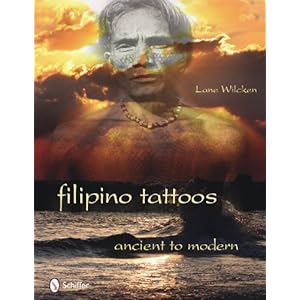
Filipino Tattoos Ancient to Modern by Lane Wilcken

Lane Wilcken became one of the Co-Directors of CFBS recently and his book, Filipino Tattoos: Ancient to Modern, just came out. 


I just wrote and posted a book review for Lane's book. Lane has worked on and written this book with the utmost passion for his Philippine roots, and with love and respect for his family and ancestry. He writes in the true spirit of Pakikipagkapwa---Sacred Interconnection with all Life. 


Congrats and thank you, Lane. 


Get more information on his book and read my review at http://www.amazon.com/Filipino-Tattoos-Ancient-Modern-Wilcken/dp/0764336029


Sunday, December 19, 2010

The masses and their messianic role

“...social transformation cannot take place unless the ordinary people – the masses – take an active role in effecting such transformation at all levels”


Published Date: November 16, 2010
By Karl Gaspar
The masses and their messianic role thumbnail
Brother Karl Gaspar
In a Third World setting such as the Philippines, social transformation cannot take place unless the ordinary people – the masses – take an active role in effecting such transformation at all levels: individual, family, community, the nation-state and even at the cosmic level, given the reality of climate change today.

Change agents used to emphasize the need to highlight agency if society is to change from injustice to equality, dysfunctionality to unity, from slavery to emancipation of oppressed sectors. A change of heart leads to justice, peace, harmony and progress.

In time, there was a realization that, for all the Church did to change people’s hearts, the structures of society remain oppressive and disenfranchise those who are marginalized in a society dominated by the rich and powerful. Landless peasants, unemployed workers, indigenous peoples, subjugated women and others are still pushed to the margins.

Using tools of analysis that pinpointed the unjust structures of society, many change agents among pastoral workers concluded that there was need for the conscientization and organization of the poor and the oppressed. Transformation of peoples and the economic, political and social structures of the nation-state will come about only if there was a mobilization of the masses for their own liberation.

Organizing urban poor settlers, landless peasants, agricultural workers, indigenous peoples, women and even middle class citizens was the call of the moment during the tumultuous years of martial rule.

Then came People Power. New insights were gained in the course of the mobilization of the masses, some of whom were not part of the organizing work of civil society agents, including church pastoral workers. Ordinary Filipinos held on to religious icons and expressed a belief system that aspired to liberation from the evils of martial rule. With courage in their hearts mobilized from various sources, the masses were willing to risk their lives.

The book The Masses are Messiah: Contemplating the Filipino soul is the result of  two years’ research. To conduct interviews and focused group discussions, the author traveled all over the country asking two questions: Is there such a thing as Filipino spirituality? If there is, is this transformation-oriented?

The study concluded that, indeed, there is such a thing as Filipino spirituality and it is transformative at all levels: self, family, community, nation-state and cosmic. But it is at the level of the ordinary people – the masses – where this spirituality is best manifested. It is also there among those in the middle sectors especially those belonging to civil society organizations who are at the support of the struggling poor.

The roots of Filipino spirituality
The first part of the book’s title – The Masses are Messiah – is taken from a poem written by a young Filipino who was one of the first young people who resisted the Marcos dictatorship. Eman Lacaba, a poet and philosopher went to the best schools in Manila including the Ateneo de Manila University. Beyond the confines of traditional church structures, he sought the space where he could walk his talk, namely, to be on the side of the poor and the oppressed.

Hundreds of Filipinos would take the same path of resistance and martyrdom including priests, religious, Basic Ecclesial Communities, lay leaders and those at the forefront of the struggle. How did such deep commitment arise? What were the roots of their militancy that empowered them to overcome their fears and embrace a life that paralleled the one of THE Messiah?
The book traces these roots to the indigenous belief system of our ancestors in the pre-conquest era that serves as the bedrock of our spirituality as a people. It was one that linked us to the spirit world in terms of our aspirations for good health, prosperity and well-being. It highlighted the sacredness of all creation; all species on earth were part of a whole web of life. It focused on our needs of “this world”, rather than “the world out there”; it had a matriarchal angle and thus was gender-inclusive.

Thus for time immemorial, our people’s spirituality was attuned to the challenges of constant transformation. Ironically, the Hispanic Christianity that the Spanish friars introduced to the islands negated many of these elements which are now much more appreciated in the post-Vatican II Church. However, despite what the friars did, our ancestors held on to the core of their indigenous spirituality. That made possible the rise of the religious social movements in Central Luzon which Rey Ileto brought to our attention in his book – Pasyon and Revolution.

During those revolts, the masses’ spirituality helped them connect to what they could mobilize from within themselves as a messianic people and even as they linked to the Messiah manifested in various icons – the Sto. Nino, the Santo Entierro, the various angels and saints and even Mary with her various titles such as Mother of Perpetual Help.

The relevance of Filipino spirituality today
The Church in the Philippines – especially from the perspective of the institutional, hierarchical and clerical Church – today is again at the crossroads. On one hand, there are the moral issues that she traditionally considers very important including issues of the reproductive rights, abortion, divorce and the like.

However, in a society where secularization is beginning to have an impact, especially among the urban middle-class sectors and the media. The Church is painted as outdated and finds herself at loggerheads with those advocating for lesser control from such institutions. The youth also find themselves not caring about such moral injunctions.

On the other hand, many people expect the Church to take a strong moral stance on issues that have become very urgent, such as genuine land reform, workers’ rights, assistance to overseas Filipino workers, women’s subjugation, ancestral domain of indigenous peoples, militarization and human rights, mining and other ecological issues.

While there are Church people who have spoken strongly on these issues, many Catholics are disappointed that there is very little discussion of these issues. And where there is little talking the talk, there is even less walking of the talk.

At these crossroads, the Church needs to re-imagine and reconstitute the pastoral-missiological fields to identify the kind of engagements church workers should have so that they can truly witness to the Gospel and make a difference in the lives of the most abandoned who continue to be marginalized on the basis of their class, ethnicity, age, gender, culture and faith traditions.

Karl M. Gaspar CSsR is director of the Alphonsian Lay Formation Institute of the Redemptorists in the Cebu Province. He teaches at the St. Alphonsus Theological and Mission Institute in Davao City and the St. Mary’s Theologate in Ozamis City.

Saturday, December 18, 2010

Babaylan and Psychology

old 1970s article refers to baylan as Philippine shamans and shamans as psychologists:


page 57
...if we take the second sense, i.e., "The Shaman
In His Role or Function of Psychologist," it seems the task may be easier.
We simply presuppose that the shman is a psychologist, and then proceed
to describe how or when he functions as such. But even this is not quite
simple. There are other questions that crop up: First of all, "What is a
Shaman? Perhaps, for many, this is the first time the word is being
bandied about. Then what do you mean by the clause the shaman plays
the role of a psychologist? A theoretical psychologist? an experimental?
a clinical? a psychiatrist? a therapeutist? etc., etc.
page 58
The Hypothesis
The hypothesis is a complex one. It has more than one parts, and
the divisions of this paper will naturally follow after them.
First, the shaman is a psychologist (a) on account of his knowledge
of the mind, and of mental states and processes; or, which amounts to
the same thing, because of his knowledge of human nature; (b) because
he is a person especially sensitive to influences and forces that are extra-
sensory, or, because he is psychic, even a "mystic in the raw," as Eliade
would characterize him; and (c) because he was the psychiatrist in pre-
literate society, in that he practiced the healing of mental diseases.

page 64
The Initiation Proper: Departure
Shamanic initiation like any initiation on the primitive level con-
sists of at least three stages: departure, transition and incorporation.
Central to the idea of initiation is that of growth or maturity. This in
turn is based on an ancient belief which finds verification not only on the
personal but also on the collective and cosmic levels, that one must die in
order to live again. This is the law that lies at the base of all existence as
we know it in the world. The phenomenon of seizure or "an overpower-
ing mental crisis" which is characteristic of shamanic call documented all
over the world, is actually the beginning of the initiation, and can be
likened to the stage of departure from one's wonted and accustomed
way of life. It matters not whether this seizure comes spontaneously or
has been deliberately brought about. What is important is that it happens
at all. And still more important, that the shaman candidate is cured
of this mental illness, generally through his own efforts and that of the
spirits. The very name of the shaman in many Philippine tribes, namely,
baylan, balian, ballyan, which is rooted on the Sanskrit word ba-di mean-
ing "a fit of sudden and inexplicable trembling attributed by the peoples
of the Malay peninsula to supernatural agency" (Christie, Subanuns,
p. 2 n. 1) serves notice of this mental seizure as typical of this stage of
shamanic consecration.

page 63
The Call to Shamanism
The call to shamanism by the spirits could come in many ways:
directly, through a sudden fit of trembling and insanity or near insanity,
as in the case of the shamans among the early Bisayans (Eliade, Shaman-
ism, 33 ff ; Alzinas, Historia 122-23 ; 2 16-2 17) ; or during a long period
of sickness or depression, when, they claim, a diwata or anito or spirit
calls on them to become his friend, promising himself to be his familiar
spirit; or by a vision, as in the case of the Goldis and their ayamis, or
of a Subanun who, having been in the forest for a number of days, and
finding himself short of food, suddenly "saw" a diwata riding a boat,
who promised to become his guardian spirit. (Christie, Subanuns, p. 4).
Or through dreams, waking visions, or harrowing experiences like being
hit by lightning and coming through unscathed, or drowning and being
revived; or dying and eventually resuscitating; or physically disappearing
for three or more days and eventually being found either on top of a
tree, usually, a balete, or he is found sitting beneath it, or on tlie rafters
of a house, or in the basement or the cellar, with a stranger and far away
look, usually oblivious of the persons and things around him, and, in
many case with a strength beyond the normal.
The shaman candidate generally gets over this initial onslaught of
madness or psychosis. He gets cured, and then his initiation into the
ranks of shamans begins. (Note well: it is possibie, as in the case of
Eskimos & American Indians, for a man to voluntarily go off into the
desert or woods in search of a vision, and to experiense a call to shaman-
ism which is signalled often by the appearance of a spirit either in human
form or in animal form.)

You can find the full text here:


Thursday, December 16, 2010

Feminism Ala Babaylan

Manila Bulletin, Sept 20, 2010

MANILA, Philippines - It is hard to believe that modern Filipinas whose ancestors suffered two waves of colonial rule -- Spain in the 16th century and the United States in the early 19th century -- have a tradition of feminism that dates back to pre-Hispanic Philippines. Yes, every modern Filipina should know that she owes her freedom and strong-mindedness in part to a more than 500-year old tradition of intentional, forceful, and positive feminism, longer than the history of women's liberation in the West.

The babaylans, an empowered class of women who reigned prior to the arrival of the Spanish colonials in the 1521, were healers, advisers of men, intercessors between material and spiritual worlds, inspirers of arts and crafts, and believers of a holistic world view, according to the scholarly writings of Dr. Fe Buenaventura Mangahas and Professor Jenny Romero Llaguno, co-editors of the 192-page Centennial Crossings, Readings on Babaylan Feminism in the Philippines, published by the C & E Publishing Inc. in 2006.

Identifying with the babaylans nowadays, appreciating what they went through when their men were defeated by colonial rule -- how these women hid, survived, and preserved their culture during the colonial era -- will give feminists in the Philippines a more solid historical ground to stand on in their advocacies on freedom and responsibility.

Majority of Filipinas would not have found it necessary to strut in the 70s and in the 80s like their bra-burning sisters from the West who eventually became anti-male and anti-family. At the time, feminism, coupled with romanticism and rebelliousness, claimed a major role in attracting young female intellectuals in universities to join the Maoist red flag. Later, many of them were dismayed to find out that macho culture was not only present but remained strong in the underground movement. Well, the season of tears is over and it's not too late to get affirmation from an older past, sisters, asserts Mangahas, former chair of the Social Sciences Department of St. Scholastica College and now a full time book writer on history and Philippine feminism."I have been studying the babaylans since the 80s," she recalls.

In a joint project with historian Dr. Zeus Salazar in 2000, Mangahas remembers reconstructing the Philippine prehistoric socio-political structure in the pamayanan (kingdom) as containing four types of leaders: the datu (king); the sundalo (warrior); the panday (technologist) and the babaylan. "In 2005, I coined the word babaylan feminism because many believed then that we did not have an indigenous tradition of feminism," says Mangahas. This was more than 30 years after she, too, almost succumbed to the belief that Western feminism presented the right model for emerging, liberal Filipinas. For Mangahas and Llaguno, modern-day feminists can use babaylan as an adjective to identify Philippine feminism. In a sense, the babaylan-spirit is like a cross to ward off the Draculas of the past and the neurosis of colonialism which have burdened us with disturbing questions about identity.

Knowing the babaylan spirit, the authors say, can help Philippine feminists understand why, despite their conscious drive for freedom, they continue to love men without guilt and nurture families unconditionally.


What was the inherent nature of the old babaylans? "Because of the babaylans, we can say that we (Filipinas) were the avatars of Asia. In pre-historic time, we never had patriarchy or matriarchy. Gender ties were egalitarian," says Mangahas. The division of labor between men and women then was not a curse, but a form of harmony. In a country that was often visited by volcanic eruptions and typhoons, men and women shared the dangers equally and protected their progeny.

This magical order was disrupted. "When the Spaniards in the 1500s co-opted the datus, the babaylans resisted fiercely. Then, they creatively adopted Christianity in order to survive; they became pasyon chanters. They functioned as a priesthood -- natural Christians who balanced both the connection between the material and non material world," explains Mangahas. "When the babaylans became rivals of the Spanish priests, the latter called them bruha or witches who allegedly dabbled in black magic. They were demonized. But I think the babaylans had true access to the good spirits," she adds."It was a good thing that the priests who came to the Philippines also studied our languages and cultural practices, which they adapted to propagate Christianity. That also helped in the preservation of our culture (including the babaylans)," says Mangahas."Our Western sisters too must have had it (the babaylan spirit), in the past, but their patriarchy became too strong and their society too rationalistic that they were forced to undertake a radical form of feminism," she explains.

Asked about the reactions of Filipino men to the book, she says, "The Filipino men who have read the book were in awe. They never imagined there was a time in the past when Filipina women were empowered, who were part of a power system, and had an egalitarian relationship with men."

"We speculate that the spirit of the babaylan still exists up to the present time. You see women who behave that way," Llaguno says. For Mangahas and Llaguno, reclaiming (intellectually) the indigenous dignity of Filipina women in the past is, ironically, the only way to give a deeper dimension and unique meaning to the freedom being sought by post-modern Filipinas. Their other mission, they add, is to end the negative view perpetrated by the Spanish priests about the babaylans.

The book, composed of 15 articles written by contemporary women who were inspired by the babaylan spirit, was a project that began in 2005, recalls Llaguno, also the book's copy-editor. A lecture on the book, including a re-launch, was held before members of the Diliman Book Club at Restaurant of Choice, University of the Philippines Alumni Association building on September 11.

COPYRIGHT 2010 Manila Bulletin Publishing Corp.
COPYRIGHT 2010 Gale, Cengage Learning

Tuesday, December 14, 2010

Relationality in the Filipinos... bayanihan spirit lives on! by Antonio Ingles

The Filipino indigenous construct reflective of the relational character or the relationality in the Filipino character refers to these two (2) Filipino values: (1) pakikipagkapwa (the principle of Filipino relationality) and (2) kapwa (the core of the Filipino personhood). The bayanihan spirit embodies these Filipino principle and core reflective of the ancient Filipinos who had been sailing together as one balangay/barangay (boat). It is an accompaniment where ancient Filipinos come alongside in a cosmic journey, moving forward and together towards life and beyond.

Solheim (2006) claims that barangay or balangay (meaning boat) was a word known by the first Spaniards to come to the Philippines. Pigafetta, meeting with the chief of Limaswa, found out that balangay was also used for the smallest political unit of Tagalog society (Solheim, 2006, p.7). According to Solheim (2006), an elderly informant on Itbayat of the Batanes Islands told Dr. Mangahas that one of the words for boat (vanua) also means homeland. Its cognate words vanua, banua, benoa, and fanua all denote the concept of village, port, town, house, land, country, cosmos, and even boat (Vitales, 2005 as cited in Solheim, 2006).

According to Abrera (2007) one important concept of this (spiritual) boat journey is abay, which refers to the boats traveling together. In Bikol, it means to travel with several boats as companions, in the Visayas, it refers to boats sailing together, and in Tagalog it signifies accompanying a person (p. 10).

In March 1964, Victor Decalan, Hans Kasten and volunteer workers from the United States Peace Corps came upon the “find of the century” in the Tabon Cave Complex (in Lipuun Point, Quezon, Palawan), a unique burial jar with a cover featuring a “ship-of-the-dead” [boat-of-the-dead] motif. It has henceforth been called the “Manunggul Jar”[1] and declared a Philippine National Treasure (Valdes, 2004, par. 16).

Chua (2007) declares that the Manunggul burial jar is unique in all respect, which dates back to the late Neolithic Period at around 710 B.C. (p. 1). This secondary burial jar is classified as funerary pottery. The form of the jar's body is full, reminiscent of the womb, and incised with curvilinear scroll designs like the waves of the sea. Its lid is adorned with the image of a small ship [boat] with two passengers (Braudis, 2005, p. 14). The two passengers each were wearing a headband, which until today is used for the preparation of the dead among some ethnic [indigenous] groups in the Philippines (Fox as cited in Braudis, 2005). Abrera (2007) argues that the concept of the abay (companion) explains why there are to be companions for the dead, who will help and serve him in the afterlife (p. 10). It is worthy of note that the boatman is the abay , who is steering rather than paddling the ship [boat], and the dead is the front figure, whose hands are folded across the chest, a widespread practice [in the Philippines] when arranging the corpse (Fox as cited in Braudis, p. 17). Thus, abay refers to the following: boats sailing together; a person who accompanies another in a journey; the soul of another that would accompany the dead to the afterlife (Abrera , 2007, p. 12).

Fox (as cited in Braudis, 2005) claims that vessel [jar] provides a clear example of a cultural link between the archaeological past and the ethnographic present. Jocano (1998) adds that our prehistoric past embodies the wisdom of our ancestors, i.e., their established pattern of thoughts, feelings, actions, and aspirations (1998, p. 21). Abrera (2007) further explains that the hero’s boat, Gadyong in the epic Sandayo of the Subanon of Zamboanga has its own mind, which explains why the boat atop the Manunggul burial jar has a face at the prow, where one can see the eyes, nose, mouth and ears. Likewise, the prow of the lipa or houseboats in Sulu and Tawi-Tawi are called sampong (face). It reflects a belief that even inanimate objects, plants and animals have souls. Abrera (2007) also clarifies that since these objects have souls they can accompany the dead on her/his journey and be brought over to the afterlife. Thus, the dead of the ancient Filipinos is never alone on her/his journey.

Jocano (1998) appeals that we need to change our prehistoric perspective in the Philippines, in the face of new evidence to firmly establish our cultural roots and national identity as a people within Filipino grounds or ever appreciate the long historical development of our cultural heritage (p. 55). As Chua (2006) puts it, the Manunggul burial jar is a testament of our history and culture, an embodiment of our experience and aspirations as a people and how we must look at ourselves —Maka-Diyos, Maka-tao, Makakalikasan at Makabansa. It is also a vision for a new generation of Filipinos who will once more take the ancient balanghay as a people (pp. 3-4).

The Philippine bangka according to Abrera (2007) comes from the Austronesian baŋka which means boat, a term also found in Indonesia and the Melanesian islands such as Fiji and Samoa (p. 1). For Solheim (2006), this balangay (boat) or barangay is referred to as a smallest political unit, and vanua (another term for balangay) is referred to as homeland and even cosmos. Though Abrera (2007) used frequently the term bangka, she never missed mentioning balangays (boat) as she refers to the oldest ones that were discovered in Butuan (p. 9). For her the bangka [balangay] is a boat that transported souls to the afterlife and that same boat had a soul of its own (Abrera, 2007, p. 12).

To the writer’s mind, the ancient Filipinos are people sailing together as one balangay/barangay/bangka (boat), and that they accompany one another [in bayanihan spirit] in a cosmic (cosmos = vanua/bangka/balangay) journey of life and beyond (afterlife). Jocano (1998) insists that we have to go back to prehistoric times to know how our culture developed to appreciate our cultural heritage as a people and rekindle the Filipino diwa (spirit) [bayanihan spirit] to guide us along the pathways of the 21st century (p. 19). The writer borrows the words of Jose Rizal to remind us of the importance of prehistory to our nationhood: "Ang hindi lumingon sa pinangalingan ay hindi makakarating sa paroroonan." [Free translation] "They who do not learn the lessons from the past cannot reach their intended destination" (as cited in Jocano, 1998, p. 22).

And what lessons were they? First, that today's relationality in the Filipino character is rooted in the prehistoric past, and second, it embodies the wisdom of our ancestors, thus the Filipinos' bayanihan spirit lives on.

References:
Abrera, M. B. (2007). The soul boat and the boat-soul: An inquiry into the indigenous “soul”. Retrieved December 4, 2010, from ResearchSEA Asia's first research news portal: http://www.researchsea.com/html/download.php/id/71/research/The%20Soul%20Boat%20and%20the%20Boat-Soul%20(English).pdf?PHPSESSID=5hffeltgedgr0frlkfvmk1f8r3

Braudis, A. (2005). The Manunggul burial jar : prototype for a worldview. (Unpublished doctoral dissertation). Asian Social Institute, Manila.

Chua, M. (2007). Art as vessel of history. Emotional reflections on culture, nation and the manunggul Jar. Retrieved December 4, 2010, from Balanghay Pangkasaysayan: http://images.balanghay.multiply.multiplycontent.com/attachment/0/SM9m4AoKCEcAAEF1EQU1/Chua%20-%20Manunggul%20Jar.pdf?nmid=115737394

Jocano, F. (1998). Filipino prehistory: Rediscovering precolonial heritage. Quezon City, Philippines : Punlad Research House.

Solheim, W. (2006). Origins of the Filipinos and their languages. Paper presented at the 9th Philippine Linguistics Congress. Retrieved December 3, 2010, from http://web.kssp.upd.edu.ph/linguistics/plc2006/papers/FullPapers/I-2_Solheim.pdf

Valdes, C. (2004). Archaeology in the philippines, the national museum and an emergent filipino nation. Retrieved December 4, 2010, from Wilhelm G. Solheim II Foundation for Philippine Archaeology, Inc.: http://homepages.uni-tuebingen.de/alfred.pawlik/Solheim/philippine_archaeology.html


[1] The custom of Jar Burial, which ranges from Sri Lanka, to the Plain of Jars, in Laos, to Japan, also was practiced in the Tabon caves. A spectacular example of a secondary burial jar is owned by the National Museum, a National Treasure, with a jar lid topped with two figures, one the deceased, arms crossed, hands touching the shoulders, the other a steersman, both seated in a proa [boat], with only the mast missing from the piece. Secondary burial was practiced across all the islands of the Philippines during this period, with the bones reburied, some in the burial jars. Seventy-eight earthenware vessels were recovered from the Manunggul cave, Palawan, specifically for burial.
Source: http://en.wikipedia.org/wiki/Prehistory_of_the_Philippines

(Originally shared with CFBS at http://www.facebook.com/notes/antonio-ingles/relationality-in-the-filipinos-bayanihan-spirit-lives-on/10150104120961807)

Wednesday, December 08, 2010

Babaylan/Catalonan knowledge in Filipino Psychology

Some excerpts from the book From Colonial to Liberation Psychology: The Philippine Experience. 
Virgilio G. Enriquez. De La Salle University Press. Manila.
Page ix

Integral to Filipino Psychology or Sikolohiyang Pilipino is Liberation Psychology or Sikolohiyang Malaya.
Page xi

At the core of the Philippine value system is the concept of kapwa.
Page 2

The fact remains that the history of psychology has to be rewritten indeed so as to reflect the different bodies of knowledge, formal or informal, found in Asia and the different cultures of the world. If this is not done, what one has is at best a history of psychology which ignores the traditional roots of psychological thought in Asia—a history of Western psychology with the word “Western” unsaid or unwritten. 
The development of psychological thought has a long history and many filiations in Asia and the rest of the world. The Philippines is no exception. To be sure, one finds psychology in the practice of the babaylan and catalonan in the Philippines but just the same, most academic departments of psychology in Philippine universities tended to ignore indigenous psychological thought and practice and instead adopted theories, methods and practices from their Western counterparts. It is only lately that more and more Filipino psychologists have come to appreciate the need to recognize the indigenous roots and contemporary social and behavioral manifestations of a “less civilized” psychology hand in hand with the awareness of the Western influence in the development of psychological thought in Asia. The value placed on modernity and development leads some to conclude that whatever is indigenous is uncivilized, making the word “indigenization” dirty. “Contextualization” as a label is thus preferred over “indigenization.”
Actually, the word “indigenization” is not as politically charged as it appears in many cases. “Contextualization” sounds neutral but it took the form of decolonization and

“indigenization” in Philippine psychology regardless of one’s dissatisfaction with the word. The Filipino word pagsasakatutubo captures the situation aptly even if pagsasakatutubo is a tongue twister for the American-trained Filipino scholar. The ultimate goal of pagsasakatutubo is a sikolohiyang malaya and mapagpalaya (i.e., a liberation psychology): malaya (literally, “free,” “independent,” and “liberated”) or unshackled by the massive American political, economic and cultural influence in Philippine life, society and psychology, and mapagpalaya (literally “liberating”) or responsive to internal Philippine social problems primarily rooted in the inequitable distribution of wealth and the Great Cultural Divide separating the Anglicized Filipinos from the masses.
Page 6

The psychological knowledge of the native Filipino traditionally held by the babaylan in the Visayas, the catalonan in Central Luzon, and the baglan in the Northern Philippines (Bailen 1967, Quiazon 1973), is an important basis of early Filipino psychology. The babaylan was the first Filipino psychologist. As a priestess she was also the guardian of Filipino sacred knowledge. In the early days she did not refer to herself as Filipino but nonetheless continued her practice as babaylan throught the centuries of identity evolution from Indio to Filipino. The dalangin (prayer) and bulong (whisper) of the catalonan and the other healers and priestesses from different ethnic groups in the Philippines are rich sources of early Filipino psychology. The use of anting-anting (amulets) and other psychological practices and beliefs of resistance movements such as the Pulajanes (Constantino 1975) are all rooted in early Filipino psychology.

Part and parcel of early Filipino psychology is the psychology found in ealy Philippine literature, be it oral or scribbled on bamboo: the salawikain (proverb) (Eugenio 1966), The bugtong (riddle), the kuwentong bayan (folk tales), the alamat (myth) and the epiko (epic).

The inherited customs of the Filipino serve as one of the funamental bases of Filipino psychology. Related to this is the rich field of ethnopsychology. Handed from generation to generation are the eliefs and practices on childcare (Absolo-Domingo 1961, Quisimbing 1964, Aldab-Lim 1966), Temporal 1968, Almendral 1969, Adea 1974, Lagmay 1974, Alonto 1975) and the intricate knowledge which governs interpersonal relationships (Gutierrez-Gonzales 1968, Almario 1972, Nuevo 1973). The Filipino psychologist cannot gain this knowledge in New York, Paris or Munich. It is best that the psychologist actually live in the barrio where he came from in order to learn and rediscover Filipino psychology.
Filipino psychology is the attachment of importance to the Filipino and his consciousness. The totality of the Filipino—both his material and spiritual aspects—are given emphasis. This perspective, labeled sikolohiyang Pilipino, motivates the social scientist to investigate the traditional beliefs of native Filipinos.

“A Palawan babaylan’s views of disease causation.” The U.P. Anbtrolophology Bulletin 3 (1), 6-9. Jerome Bailen. 1967

“Personal at pormal na konsultasyon hinggil sa perspektibo ng sikolohiya sa Pilipinas para sa kasaysayan” Serafin Quiazon, Jr. Kasama si A.V. Lagmay. Sulu Hotel, Lunso Quezon, Nobyembre 1973.

A History of the Philippines: From the Spanish Colonization to the Second World War. Renato Constantino. Monthly Review Press. New York. 1975.

Tuesday, November 02, 2010

Book Review: An Encyclopedia of Shamanism

Letecia writes:

Hey there, can't remember if this link was shared before. The books are actually now published in paperback and at about half the cost, not that I have my copies yet. It looks interesting. I have also including a few links at the bottom of the page, one the author's website, the last one is a link to Google books where you can take a look at the book.

For me it helps to contextualize Filipino Magical/Priestess/Oracle/Healers in relationship to the global view of first nations peoples commonly named "Shaman's" by researchers, academics and practitioners.

Enjoy!

****

Shaman's Drum Reviews: An Encyclopedia of Shamanism

An Encyclopedia of Shamanism by Christina Pratt. New York, NY: Rosen Publishing, 2007. Biblio; index; notes; 8.5” x 11.25”, 616 pp.; two vols.; $200.00 (paperback).

Reviewed by Timothy White. Reprinted from Shaman's Drum, Number 75.

In An Encyclopedia of Shamanism, Christina Pratt has compiled a potentially useful—although rather expensive—reference tool that bears testimony to how far shamanology has come in the last few decades. Thirty years ago, shamanism was rarely discussed outside of collegiate anthropological circles. Today, we find this two-volume encyclopedia set offered by a mainstream academic press that specializes in educational books for young readers. Moreover, the set’s contents are rich enough to provide shamanic practitioners with some stimulating windows into the transformative worlds of both traditional and contemporary shamanisms. Unlike many cross-cultural overviews on shamanism, the essays and many of the entries in these volumes are enriched by the author’s personal background in several experiential shamanic traditions—including Michael Harner’s core shamanism, Malidoma Somé’s Dagara traditions, and some unidentified Ecuadorian, Nepalese, and Tibetan traditions. more

Related Links:

Last Mask Center for Shamanic Healing
Encyclopedia of Shamanism Vol. 1 by Christina Pratt
Encyclopedia of Shamanism Vol. 2 by Christina Pratt

Monday, June 07, 2010

Talaanding Seven Element Invocation

On the second day of the First International Babaylan Conference, Jennifer Navarro invoked the seven elements of the Talaanding tradition. The invocation is meant to recognize and honor the presence of the seven elements, and as Jennifer read the prayer, representatives from the conference brought symbols of each element to the Ancestor's Altar at the entrance of the main conference gathering space. Jennifer has graciously allowed us to reprint the invocation here.

Land - With each step we take we are supported by you. In your arms seeds of life are lovingly nourished.

Water - While in your embrace we are able to dive deep into meditation and reflection. Within your womb we are comforted by the whale's song.

Wood/Trees - Majestic and steadfast. We aspire to be in your likeness, strong roots anchored in the heart of Mother Earth, sturdy trunk that keeps us centered and strong, and beautiful branches and leaves that reach up and receive heaven's divine energy.

Sun -You are the Divine body that benevolently shares life energy. From your rays all living things grow and thrive.

Air - We are in constant communion with you. You are the breath of life. With each inhale and exhale we integrate your pure energy within our vessel.

Sound - It is upon your tones we ride and bring healing to the self. It is upon your vibrations we soar and become one with the divine.

Divine Spirit - You flow around us and within us. Hope, appreciation, love, bliss, joy, you are all of these things. It is through your eyes and your movements that beauty manifests.

It is Jennifer's hope that the words of the prayer reach those who resonate with it in their hearts. Thank you, Jennifer, for your generosity.

Posted by Rebecca Mabanglo-Mayor with Jennifer Navarro's permission.